Intermarkets' Privacy Policy
Donate to Ace of Spades HQ!
aceofspadeshq at gee mail.com
Buck:
buck.throckmorton at protonmail.com
CBD:
cbd at cutjibnewsletter.com
joe mannix:
mannix2024 at proton.me
MisHum:
petmorons at gee mail.com
J.J. Sefton:
sefton at cutjibnewsletter.com
Barrel of Monkeys Cafe
Democrats Melt Down Over Virginia Supreme Court Ruling, with Socialist Democrat Influencer Hasan Piker Demanding Violent Revolution and the "Smart" Commentators of the Left Unable to Read a Simple Court Decision
Quick Hits/The Week In Woke Combo Thread
DOJ Will Denaturalize 12 Cultural Enrichment Officers Who Lied About Their War Crimes and Support for Terrorism
Reform Gains Over 1,300 Seats as Labour Loses Nearly 1,200
US Launches Airstrikes Against Iranian Targets, Stops 70+ Iranian Oil Tankers from Evading the Blockade
lol
THE MORNING RANT: School Board and Down Ballot Races Are the Most Important Races You Can Vote in this Cycle
Mid-Morning Art Thread
Jon Ekdahl 2026
Jay Guevara 2025
Jim Sunk New Dawn 2025
Jewells45 2025
Bandersnatch 2024
GnuBreed 2024
Captain Hate 2023
moon_over_vermont 2023
westminsterdogshow 2023
Ann Wilson(Empire1) 2022
Dave In Texas 2022
Jesse in D.C. 2022
OregonMuse 2022
redc1c4 2021
Tami 2021
Chavez the Hugo 2020
Ibguy 2020
Rickl 2019
Joffen 2014
maildrop62 at proton dot me
Texas MoMe 2026: 10/16/2026-10/17/2026 Corsicana,TX
Contact Ben Had for info
Joe Wilson: Republican
Uh-huh.
Driven by that weird obsession liberals have of pretending they are Republicans in order to attack Republicans, Wilson implied he had been sent to Niger by Vice President Dick Cheney. Among copious other references to Cheney in the op-ed, Wilson said that CIA "officials asked if I would travel to Niger to check out the story" that Saddam Hussein had attempted to buy uranium from Niger, "so they could provide a response to the vice president's office."Soon Clown Wilson was going around claiming: "The office of the vice president, I am absolutely convinced, received a very specific response to the question it asked, and that response was based upon my trip out there."
Dick Cheney responded by saying: "I don't know Joe Wilson. I've never met Joe Wilson. I don't know who sent Joe Wilson. He never submitted a report that I ever saw when he came back." Clown Wilson's allegation that Cheney had received his (unwritten) "report" was widely repeated as fact by, among others, The New York Times.
In a huffy editorial, the Times suggested there had been a "willful effort" by the Bush administration to slander the great and honorable statesman Saddam Hussein. As evidence, the Times cited Bush's claims about Saddam seeking uranium from Niger, which, the Times said, had been "pretty well discredited" — which, according to my copy of The New York Times Stylebook means "unequivocally corroborated" — "by Joseph Wilson 4th, a former American diplomat, after he was dispatched to Niger by the CIA to look into the issue."
So liberals were allowed to puff up Wilson's "report" by claiming Wilson was sent "by the CIA." But — in the traditional liberal definition of "criminal" — Republicans were not allowed to respond by pointing out Wilson was sent to Niger by his wife, not by the CIA and certainly not by Dick Cheney.
At the beginning of the interview, Shrum commented that he had never talked to former ambassador Joseph Wilson in his life. However, a moment later Shrum was asserting that Wilson had voted for George Bush in 2000.I’m sure it’s possible Shrum knows how Wilson voted in 2000 – but the exchange made Shrum look too clever by half.
Of course, the reason Shrum made this assertion was an attempt to draw the controversial Wilson as a non-partisan. But one quick look at publicly available information at opensecrets.org reveals that Wilson is hardly a non-partisan guy.
In 2000, while he contributed $1,000 to George Bush's presidential campaign, Wilson also contributed $1,000 to Al Gore's presidential campaign. In addition, he gave $1,000 to Senator Ted Kennedy (D-MA) and $500 to Rep. Charles Rangel (D-NY) that same election cycle.
In 2002 Wilson contributed $1,000 to Sen. Hillary Clinton (D-NY). He also contributed a total of $1,750 to three others: two relatively unknown congressmen -- Rep. Ed Royce (R-CA) and Rep. Nick Rahal (D-WV) -- and a Democratic senatorial candidate in Idaho, former Ambassador to Belgium Alan Blinken.
In 2004 Wilson contributed $2,000 to Sen. John Kerry (D-MA).
Partisan Democrats don't hate all Republicans. There are some Republicans they like quite a bit. Republicans like Wilson and Richard Clarke. You know-- Democrats posing as Republicans.
The bestest Republicans in the whole wide world.
PS: I'm a Democrat, so liberal Democrats should listen to what I have to say.
I swear. Seriously. One time I saw Katrina VanDerHeuvelvelvelhueven at a coffee joing and I restrained myself from whore-whipping here on the spot. That's kind of an in-kind donation to The Nation magazine.
Every time you mention Joe Wilson, you should note that everything he said about Niger was a complete and total lie.
As the Senate Intelligence Committee report pointed out, what he found in Niger confirmed Saddam's attempt to get uranium there, not refuted it.
Yes... I guess I should. I keep meaning to link the various pieces pointing this out, but I don't.
Isn't this common conservative knowledge?
Maybe around here, but lots of people brain-dumped everything they knew about this crap after November 2.
Yes, every Republican I know works on Democratic presidential campaigns.
Pffft.
I hate our MSM so fucking much today. Not once has ANY article on the Plame affair mentioned the fact WILSON IS A PROVEN LIAR!!
Not one fucking mention of the Senate report. Unbelieveable.
BTW, I posted the Senate report stuff on Eschaton for fun, and (surprise!) I was called delusional for saying Wilson lied.
So much for the "reality-based" community. Details on my blog, in the unlikely event anyone cares to read about how grass is green, the sky is blue, and liberals on Atrios' blog are ignorant.
That "confirmation" in the SIC report is about as tenuous and shaky as it could possibly be: Joe Wilson's report of a conversation he had with former Nigerien Prime Minister Mayaki about a conversation Mayaki had with a "businessman" about having a conversation with an Iraqi trade delegation that Mayaki "interpreted" would be about uranium, if the conversation (the last one) had ever been allowed to happen. Whew. That takes hearsay to a new dimension--what someone said someone said they think they would have heard someone say. All this, of course, from what someone told the Senate Intelligence Committee.
Sceptical:
Yes, one could make the same complaint about Wilson's entire visit, leading to the presumption that he grossly overstated the reliability of his findings.
And yet such a report is seen as "confirmation?" Of all the cherries to pick, it would seem the least promising. And what were his findings, exactly? That he concluded something that didn't actually happen was unlikely to have happened?
The issue is that he claimed that Iraq had made no overtures to Niger, when in fact his own report said that it had. Certainly doesn't lend confidence to anything else he's said.
His own report, as I thought we established, said no such thing. It was, it seems to me, a rather diaphonous relation of a conversation about a conversation leading to a conversation that never happened. To say that it "confirmed" anything about an Iraqi attempt to buy uranium from Niger is quite a stretch.
To be honest, I really don't have much to add to what the Powerline folks said a year ago:
http://www.powerlineblog.com/archives/007135.php
Either you find that it seriously undermines Wilson's credibility, or you don't. In my view, whether it "confirmed" Iraq's intent or not, it certainly confirmed that Wilson was not entirely forthcoming about the results of this trip.
You're a Democrat? TREASON!
Just kidding.
It seems to me that the source for all this, any possible flaws notwithstanding, more authoritative than a blog at any rate, is the Senate Intelligence Committee report:
http://intelligence.senate.gov/iraqreport2.pdf
In the section on Niger, it attempts to determine how it was that reports of a uranium "contract" between Iraq and Niger, reports founded on a forgery, came to be cited by the president publicly as cause for alarm. It seems to go without saying, in the SIC report, that Wilson's conclusions from his trip to ascertain the veracity of such a deal aligned quite neatly with the fact that no such deal existed, and constituted early warning that the administration would promulgate a falsehood. It also makes clear that certain groups within the executive, i.e., the State Dept., reasonably interpreted Wilson's opinions as further support for their suspicion that any such uranium deal was highly unlikely. As it turned out, he was correct, and the reasons he gave were sound ones. In fact, the Intelligence Comittee concludes that a serious lapse had occurred if indeed the Vice President had not been apprised of Wilson's report (Conclusion 14). I fail to see how any of this "confirmed Saddam's attempt to get uranium there, not refuted it", as asserted by the first poster here.
Thanks for the link - I skimmed the relevant section. I must say that it did nothing to change my view. It is clear that the uranium deal was unlikely, since Niger was abiding by the restraints placed upon it. It is also clear that Mayaki thought that a deal had been solicited.
Since Wilson claimed that a deal had not been solicited, despite reporting Mayaki's comments to the CIA, it seems to me he was playing very loosely with the truth. The question on the table is not the quality of the evidence, but whether there was any evidence at all. Wilson said there was not.
Actually, as I originally pointed out, it is asserted that Wilson said Mayaki suspected a deal would have been solicited based on the veiled insinuation (perhaps) of an anonymous (to us) "businessman" several years prior. To me this is the precise opposite of "clear," and hardly constitutes evidence for a solicitation. In fact, Mayaki seems to be saying the opposite: that when he subsequently met an Iraqi trade delegation, no such solicitation was proffered (although he oddly, vaguely, and perhaps disingenuously, credits himself for the absence of such a solicitation).
Wilson: not even nominally a Republican
I'm afraid we're getting down to the definition of what "is" is. Here's the actual text we're discussing:
"Mayaki said, however, that in June 1999, XXXX businessman, approached him and and insisted that Mayaki meet with an Iraqi trade delegation to discuss "expanding commercial relations" between Niger and Iraq. The intelligence report said that Mayaki interpreted "expanding commercial relations" to mean that the delegation wanted to discuss uranium yellowcake sales. The intelligence report also said that "although the meeting took place, Mayaki let the matter drop due to the UN sanctions on Iraq." (p. 43)"
There's some coy phraseology here in terms of Mayaki letting "the matter drop," so that it's unclear if the topic was broached at the meeting. But it would be odd for him to mention the incident at all if they had held the meeting and it turned out his interpretation was wrong. My take on the coyness is that Mayaki was trying to avoid offending the Iraqis, so he took the meeting, but he didn't want to get in trouble with the UN, so he did not directly state that a yellowcake discussion took place. Note that in contrast to your original posting, the meeting did take place, making the link substantially less tenuous.
If you read the summary of the reports officer's grading of Wilson's report on p. 46, he says that this story of Mayaki's was the most important fact in Wilson's report. In the following paragraph it states that the DIA and CIA placed little value on the report, except for Mayaki's story, which they found "interesting."
This will have to be my final posting on the matter, since I owe the world a proposal or two by 6 am EST. But I would ask: was there really "no" evidence that Iraq was soliciting yellowcake, or was it just "weak" evidence? In my view it is slightly better than weak, and so I feel comfortable in saying the Wilson dissembled. The evidence may speak to you differently, but given the several other untruths the Intelligence Committe uncovered in Wilson's statements to the press, one could still easily draw the same conclusion as I.
I do not dispute the meaning of the word "is". But I do believe careful reading of the SIC report, and apparently my posts, is in order. That a meeting between Mayaki and the Iraqi trade delegation took place is no way "in contrast" to my original post: I wrote that a conversation, i.e., a conversation about a uranium deal with the Iraqis, never took place. To imagine the SIC report "confirms" such a conversation happened is to presume that one can read Mayaki's mind through several layers of blurry time-delayed hearsay, a feat I am prepared to characterize as highly improbable. It apparently must be noted that Mayaki's "interpretation" extends only as far as the utterance of a "businessman." While, as I say, there is as yet no confusion over the definition of the word "is," I am afraid I am not quite clear on your definition of the word "confirm."
That the CIA mishandled, misinterpreted and neglected key facts and indicators throughout the length and breadth of the fiasco is exactly what the SIC report establishes in its section on the false Niger uranium "deal," and concludes, as I noted above, that the intelligence chain was gravely remiss in not alerting the administration's highest levels of Wilson's findings. In other words, it is precisely the DIA/CIA's misallocation of "value" in the evidence available that is found wanting, and therefore the conclusions they drew are of little value themselves.
I apologize for equating "meeting" with "converstation," but as I pointed out above, it seems likely to me that some form of "conversation" did take place at the trade meeting.
Before I continue, perhaps we should clear one thing up - I am not the orginal poster who used the word "confirmed." I have no interest in defending that usage, and have not been attempting to do so during this discussion. I agree that the evidence supplied in Wilson's report is not sufficient to "confirm" that a deal was discussed.
My point has been that it is also certainly not sufficient to "confirm" that a deal was not discussed, as Wilson stated to the press. Taking the evidence at face value, we have no reason to reject Mayaki's assertion that the subject was subtly broached. It is not strong evidence for, but it is certainly not evidence against, the claim that Iraq was seeking yellowcake. Since Wilson told the press that the President's "16 words" were a blatant lie because his report found no evidence that Iraq was seeking yellowcake, he lied.
It is not clear to me from reading Conclusion 14 (p. 74) whether the Committee is criticizing the CIA because of the value of the evidence, or because of the breakdown in communication within the administration. I can't find anything that says they placed any more value on Wilson's report than the CIA did, so I suspect it is the latter.
I think its appearant the Senate committee found reason to reject Mayaki's inuendo (not assertion) and they evidently placed more value on Wilson's report than the CIA by finding fault that it didn't rise to Cheney's attention. Personally, I think the CIA is covering for Cheney.
I find it highly dubious, in light of the administration's and indeed Cheney's stated objectives before even 9/11 to involve us in an overthrow of Saddam, that this information was suppressed and that false and forgered allegations against Iraq were cited as excuses for the Iraqi debacle, in the State of the Union address no less -- eventhough evidence of these allegations were investigated beforehand and discredited by Wilson.
What really makes this whole affair stink to high heaven is the dirty politics played out by Karl Rove consequent to Wilson going public.
Why isn't anyone talking about whitewashing and coverup of the Valerie Plame issue? Or is everyone afraid this supposedly high-minded adminstration will focus their nefarious methods on the detractors?
I think its appearant the Senate committee found reason to reject Mayaki's inuendo (not assertion) and they evidently placed more value on Wilson's report than the CIA by finding fault that it didn't rise to Cheney's attention. Personally, I think the CIA is covering for Cheney.
I find it highly dubious, in light of the administration's and indeed Cheney's stated objectives before even 9/11 to involve us in an overthrow of Saddam, that this information was suppressed and that false and forgered allegations against Iraq were cited as excuses for the Iraqi debacle, in the State of the Union address no less -- eventhough evidence of these allegations were investigated beforehand and discredited by Wilson.
What really makes this whole affair stink to high heaven is the dirty politics played out by Karl Rove consequent to Wilson going public.
Why isn't anyone talking about whitewashing and coverup of the Valerie Plame issue? Or is everyone afraid this supposedly high-minded adminstration will focus their nefarious methods on the detractors?
HalfByte:
Mayaki asserted that there was an innuendo - so "assertion" is correct. And it is not at all apparent that the Senate placed any value on Wilson's report - the wording in Conclusion 14 indicates that they were more concerned with coordination than Wilson's anemic results.
The rest of your comment is speculative and inflammatory.
Oh come on Geoff, everybody knows Iraq wanted to open up secret trade negotiations to buy cowpeas and onions!
Goats, they had enough of those.
Yeah!
Kind of weak though, "an assertion of an innuendo".
That's like me saying there's a concrete but vague belief based on someone else's recall of their interpretation of events that may or may not be accurate.
Niger has much more to offer the world than agriculture -- and although I can't say it's been coming from you, I find many posts on this site more than inflammatory.
I don't think those trade negotiations were all that secret. Most trade negotiations are held privately so as not to influence the markets but secret means there would be a higher level of, well, secretiveness regarding the proceedings. There would not only be a lack of announcement but also denials and distractions. None of that was ever mentioned or "asserted". I find it very odd that we aren't applying our American Tradition of "innocent till proven guilty" and "benefit of the doubt" regarding evidence obtained from someone whose served under the direction of Presidents from both parties.
Also, I find how the administration has handled this whole issue as linked with the Valerie Plame issue as being more than inflammatory. It's a national disgrace unfolding before our eyes, albeit ever so slowly due to the ongoing efforts at stonewalling, whitewashing, and coverup.
Funny how this culture of life the president talks about permeating his followers, so readily attempted to sacrifice someone that took risks for this country and was serving this country up to and including the moment the leaker perpetrated their dastardly deed.
Make that leakerZ.
Senior level ones at that!
No apology is necessary, unless, of course, you meant to malign me. I didn't take it that way, and actually found your misreading of my post instructive. Is your interpretation of Wilson's story possible? Perhaps. But as is to be expected with such tenuous tales, plausible scenarios to explain them may be produced at will. My personal favorite, somewhat more amenable to Occam's Razor than yours, I believe, is that, given the notorious propensity of the CIA to fund creatures such as Mayaki in their clumsy efforts to gain "human intelligence" in exotic locales, and given the notorious venality of African politicians, Mayaki's performance should be seen as an attempt to peddle himself as an "asset." Viewed in this light, there is a significant chance that his story is almost entirely fiction, and a near certainty that it is highly embellished. Indeed, one wonders if and how Wilson arranged compensation for Mayaki's strenuous recollections, and I suppose if the SIC bothered itself about such details, they are buried under the acres of stricken text. Though I am fond of my interpretation, I would not say that Wilson's report "confirms" it or even suggests that Mayaki is a "liar." I have only my suspicions, and I know the difference between them and "evidence," and I would be embarrassed to confuse the two. At times, you seem to understand this distinction as well, and agree that Wilson's findings do not support any conclusion that the Iraqis sought uranium from Niger; yet at other times you seem to lose the distinction--for instance when you claim that Wilson lied when he claimed what you readily admit.
That the SIC valued Wilson's report differently than the CIA is simply obvious from the fact that the SIC found it should have been promoted, and the CIA didn't. When interpreting this conclusion, I think one should bear in mind its purpose: the SIC report's section on Niger is not meant to be a general audit of reporting procedure. Rather, it is a focused attempt to understand how the president cited a forgery in a public speech, and how such a blunder could have been prevented. I am stumped as to how you suppose the promotion of Wilson's report, which you characterize as "flimsy" and valueless, would have served to avert the president's repetition of an outright lie.
Sceptical:
Here are what I believe to be our points of agreement and disagreement:
1) There was no Iraq-Niger deal, and Wilson's report supports that: Agreed!!
2) There is not sufficient evidence in Wilson's report to definitively state that Iraq was seeking yellowcake from Niger: Agreed!!
3) There was not sufficient evidence in Wilson's report to state that Iraq was *not* seeking yellowcake, and in fact there is weak evidence that it was: I, at least, believe that this is incontrovertible.
4) Wilson stated in several press interviews that his report to the CIA showed that there was no evidence that Iraq had sought yellowcake. To me, that means that not only did he overstate the value of his results, he baldly lied.
You seem to be focusing on whether Niger actually consummated the deal with Iraq, rather than whether Wilson reported evidence that Iraq merely sought such a deal.
I brought up the CIA/DIA assessment simply to show that if any part of Wilson's report should *not* have been overlooked, it was that portion referring to Mayaki. I don't think Wilson's report was worth briefing to the Administration, and as I wrote above, my supposition is that the SIC was really striving to improve internal communications.
"The president's repitition of an outright lie" is not really part of the discussion on the table, but I think that certainly that characterization is a gross misrepresentation of the "16 words" controversy. While I agree that the "16 words" did not meet the standards one would expect for a SOTU speech, I don't believe that one could fairly call them "an outright lie."
I think your speculations concerning Mayaki's possible situation and motivations are interesting, although as a former member of Niger's administration, he may not have been a highly prized asset.
It is gratifying to see how emphatically agreeable we are. Your third and fourth points are somewhat muddled and undermined by the second, I think. The "evidence" (which you downgrade to "weak evidence"), supports no conclusion, as you enthusiastically agree. But data which supports no conclusion, in my opinion, hardly merits the term "evidence," i.e., nothing is "evident" from it. Indeed, Wilson's report does not support the conclusion that the Iraqi delegates solicited Mayaki for anything in particular, let alone uranium, and therefore is not "evidence," weak or otherwise. I therefore think it is hardly a "bald lie" to point out that Wilson's trip found no evidence of an Iraqi solicitation for any sort of uranium. I think we would do well to keep in mind the purpose of Wilson's trip: to ascertain whether the "contract" for "500 tons" of uranium between Niger and Iraq was consummated or even existed. Wilson, for various sound reasons, correctly concluded from his trip that it was a fiction.
You seriously misunderstand the SIC report if you believe the conclusions in the Niger section are an attempt to simply "improve internal communications." As I've pointed out twice already, what the SIC was "striving" to achieve in that section is a dissection of how the president's blunder occurred, and how it could have been avoided. It is obvious to me that they conclude Wilson's report might have helped avert it, if it had been brought to the vice-president's attention.
I fail to see how the phrase "repetition of an outright lie" is a "gross misreprentation" of the "16 words." The president said "...the British government has learned...," which everyone admits is a citation of a forged document. Few things are as deserving of the label "outright lie" as a forgery, and I believe a "citation" is, in a certain important sense, a "repetition." Therefore, "repetition of an outright lie" is a perfectly acceptable, if somewhat forthright, description of the "16 words."
I assure you sir that the muddlement is all yours. As I said previously, on the face of it, Mayaki told Wilson that he thought that Iraq was sniffing around trying to buy yellowcake. This seems plausible, since of Niger's four significant exports, only yellowcake would be attractive to Iraq. Wilson thought the information important enough to include in his report, and there is no mention in the SIC that he downgraded or discounted the information.
That is "evidence" in my parlance: arbitrarily deciding to round it down to zero because it is vague is contrary to the dictates of scientific inquiry (a field in which I labor). The presence of vague evidence suggests that more evidence should be gathered so that a definitive determination may finally be made. It certainly does not suggest that it should be discarded simply because it cannot stand on its own.
I do agree that Wilson was correct in his determination that no deal existed, but that is irrelevant.
The SIC's recommendation will have to be an area where we disagree. Wilson's trip was a small portion of the overall intelligence operation, he didn't get to speak to current government officials, and his investigation consisted of running down a list of vague talking points while sipping mint tea. None of those circumstances are his fault - it's what the CIA wanted, and he seems to have done a decent job at it. But I think you and he are greatly inflating the trip's contribution to the inteligence gathering effort.
As far as the "16 words" go, I'm surprised you ignore the fact the British government claimed that there were other sources aside from the forged memos, and that they still stand by that claim. Therefore, no one conversant with the situation "admits" that his comment was "a citation of a forged document."
Tell me if this makes sense to you. In the passage we've been discussing, the original Iraqi contact "insisted" that Mayake take a meeting with an Iraqi delegation to discuss "expanding commercial relations." Then on page 44 it says:
" . . . because Mayaki was wary of discussing any trade issues with a country under UN sanctions, he made a successful effort to steer the conversation away from a discussion of trade with the Iraqi delegation."
So what did they talk about? The subject of the meeting is trade and Mayaki steers the conversation away from it? This sounds like Mayaki dissembling to cover his aft end.
Your assurances notwithstanding, I believe my points thus far to be clearly and unambiguously stated in plain English, and in no way "muddled." They do not contradict each other, or even undermine one another, as far as I can tell. If anything seems unclear to you, please let me know.
It will be refreshing to review the facts once again, if you choose. Mayaki never said Iraqis were "fishing" for anything, as far as we know: instead he attributes an insinuation to a "businessman" whose nationality, let alone identity, is apparently classified or unknown. Mayaki mentions a subsequent meeting with Iraqi delegates (this review has been enlightening--a more careful reading on my part has shown that we have been inaccurate in describing the Iraqi visit as a "trade delegation", it is nowhere referred to as such, and is probably the visit of the Iraqi Vatican ambassador in April of 1999), but tells us nothing about what transpired, except to mention that "matters were dropped" due to UN trade sanctions. We should keep in mind that those trade sanctions prohibited trade with Iraq for anything other than food or medicine. It just so happens that one of Niger's exports is raw cotton, one of the world's most common internationally traded commodities, but neither food nor medicine (although, to be honest, I have no idea whether the sanctions made provisions for such essentials as cotton or leather). Significantly, a subsequent Defense Humint Service examination of cargo consigned to Iraq in a Benin warehouse found bales of cotton, leading me to wonder where exactly Mayaki let matters drop. But still I would refrain from describing Wilson's report as "evidence" that Mayaki cut a cotton deal under the table with the Iraqis. I cannot speak for your parlance, but the term "evidence" has a firm definition as something which furnishes direct testimony or proof of an assertion--hints, suggestions, assumptions and whimsical scenarios do not conform to this definition. Even most species of deduction are not properly considered "evidence," in my view. "Proof" is a central concept to the definition of "evidence," and Mayaki's story--tantalizing as it might be with respect to many mutually contradictory affairs--is nowhere in the vicinity of proof, as you readily concede.
By the way, with respect to an earlier supposition of yours that Mayaki "may not have been a highly prized asset": this does not bear on whether he thought it was worth the effort to advertize himself as one, "highly prized" or not. And as we all know, advertisements are not well known for their veracity.
If you are looking for an "inflation" of Wilson's report, look no further than the SIC Iraq Intelligence report. Your attempt to gloss over its "Conclusion 14" in the Niger section can only be based on a mistake concerning its import and purpose. While it does indeed flag a "breakdown in communication," one needs to understand how remedying that particular breakdown might have served to avert the subsequent presidential blunder.
The British, understandably, feel quite stung by this whole affair, and have examined the matter in their Parliamentary counterpart to the Senate Intelligence Committee report on Iraq Intelligence, the so-called "Butler report":
www.butlerreview.com/report/report.pdf [unfortunately, I could not properly paste the link here because this "Ace of Spades HQ" site flagged "org . uk" as "questionable content", perhaps thereby throwing its own 2 cents into the discourse: just replace the ".com" in it with "org . uk", without the spaces]
In it, they are prepared to offer no other source for their allegation than a trip the Iraqi ambassador to the Vatican made to Africa in 1999, which they themselves characterize as weak grounds for any conclusion. There have been some British press reports indicating that a "Somali businessman" may have been the source of these rumors. The Butler Report supports the suspicion among many "conversant" with the whole affair that the whole "Niger deal" story--and much else--blossomed in a classic "echo chamber," whereby the various intelligence services--French, British, Italian, American--all exchanged and amplified the same rumor based on the same forged documents and Iraqi African junket. The fact that the SIC report analyzes the provenance of the "16 words" in the context of an investigation of the forgery and how it came to be accepted by the CIA as "evidence" clearly shows that those most "conversant" with the matter, i.e., the Senate Intelligence Committee, do in fact admit the false SOTU assertion was founded upon it.
"Muddlement"? you even muddle the word "muddle". Kinda hard to follow the thread when you can't find the word to describe the color in this hypnotic tapestry, isn't it?
Maybe you meant "Middlemen"?
http://dictionary.reference.com/search?q=muddlement
And as to the point about Ma-yuk-i, of course he'd exaggerate his innuendo, so as to give himself more heft in these intelligence circles (and I do mean circles) our military and CIA operatives seem to continually setup with questionable people. Him being a former player in the government would, of course, give even more credence to the theory that he'd be inticed to inflate his dealings in order to worm his way back into things. I wouldn't give his statements any worth, but at least Wilson went the extra yard and checked out things independently by discussing this episode while there with other "conversants".
Seems to me he picked apart the supposed intel on Iraq and reported its dubiousness, but alas it fell on deaf ears as this administration (especially the neo-wonks of Perle and Wolfowitz as they whispered in Cheneys ear) had already made up their minds and thusly suppressed the info from Wilson's report so they could go ahead with their nefarious designs. Unfortunately, one of the casualties happened to be speach being uttered by the President of the United States during a State of the Union address. I guess they viewed that as acceptable collateral damage.
And all the while the media played along like the docile lambs they've been since Starr finished tearing apart Clinton. Complicity is the word I'm looking for here regarding those "Fair and Balanced" reporters the White House plants for their briefings.
I'm just loving the irony of this site flagging that british document as having "questionable content". Jeez, talk about disregarding your own advisors messages seems to be in vogue for these right-wingers nowadays.
Sceptical:
Sorry to be brief, but I just lost two versions of my response and have no energy left for a third (curse for a novice!). The upshot is that you and I have a strong disagreement concerning the definition of the word "evidence." I follow the first definition provided by the online American Heritage dictionary - you seem to be following an entirely different definition. I believe that the entirety of our disagreement can be resolved by addressing this semantic difference.
And Half-Byte - I would enjoy including you in this discussion if you would be less conjectural and partisan. I am also disappointed to find that your are sort to engage in ad hominem attacks following my admittedly self-indulgent, but harmless, bit of word play (you caught me - I made up the word "muddlement" because I thought it was funny). If you could find your way to following Sceptical's lead, we might be able to engage in mutually profitable discourse. Otherwise you're just posting to the void.
I use Merriam-Webster's but we can refer to American Heritage, if you like. As a noun, its first definition is something "helpful in forming a conclusion or judgment." We have established, it seems to me, that Wilson's story about Mayaki's story about a conversation with a "businessman" about a conversation he should have had with Iraqis, but didn't, helps us conclude nothing. The second definition is "something indicative; an outward sign." Again, I think the many plausible explanations for the Mayaki tale demonstrate that nothing in particular is indicated by it. The third definition, referencing legal admissibility is obviously inappropriate: hearsay is inadmissible. The other definitions, as a transitive verb and an idiom, seem almost tailored by American Heritage to exclude our subject: "To indicate clearly, exemplify or prove," that which is "plainly visible." The etymology is even more forthright: from the Latin evidentia, evidens, evident, meaning "obvious." This awkward and attenuated chain of hearsay in Wilson's Niger report rises to none of these definitions or intended meanings. The claims you assert that it supports are not made "obvious", "plainly visible," or "proven" by Mayaki's story. They are not "indicated" by it, his story is no "outward sign," and we are not assisted in any way to a "conclusion" or "judgement" of them in the light of it. In short, by American Heritage's definition, and our close examination of the SIC report's text, the Mayaki affair is simply not "evidence."
I'm afraid I have to reject your interpretation of the first definition. Because a piece of evidence (say a strand of hair from a murder investigation) is not enough to, on its own, support a conclusion, does not mean it is not evidence. If we're going to find this semantic divide unbroachable, then let me conclude this entertaining exchange before it becomes tiresome.
1) Mayaki told Wilson his story.
2) Wilson thought the story sufficiently interesting to report it to the CIA
3)Both the CIA and DIA thought that the story was the only "interesting" component of his report.
4) Wilson then told the press that his report showed that there was no evidence for the "Iraq seeking yellowcake from Africa" claim.
You may quibble about the meaning of evidence, but I don't believe that Wilson himself has ever discounted Mayaki's story.
And I think that you should re-read the Butler report. I do not think it says what you think it says. You should also check Niger's cotton exports - all of 1000 tons in 2002 (out of 723,000 tons exported by eight West African countries).
The "semantic divide" can be easily bridged by an honest assessment of the definition you pointed me towards, and what the Mayaki story establishes. The definition is straightforward and easily understood. The question then turns on whether the Mayaki tale conforms to it. Are we assisted in any way to "form a conclusion or judgement" about whether the Iraqis sought uranium from Niger? We are not. The story itself does not state that Mayaki was approached by any Iraqis to provide uranium, or that the subject was even broached by them. He interprets a "businessman's" words to mean that he was being approached, but nowhere is it stated that this "businessman" was Iraqi, represented Iraq, or acted with the knowledge of any Iraqi. We can thus impute just about any identity and motivation to this character. When Iraqis finally do enter the story, they do not say a word about uranium or anything else. The story also has a sensible enough context to cast doubt on any or all of its content. In other words, plausible scenarios that contain it fan out in all directions, and the story itself gives no indication which may be closest to the truth. Quite unlike a strand of hair. A strand of hair may indeed support a conclusion: for instance that someone was present in a room or vehicle (a "conclusion" it might directly establish). His or her presence there may then support further conclusions, and therefore "help us in forming a judgement." This would be "evidence." But if one were to find a strand of a person's hair in that person's own home, it would establish nothing, since innumerable--as innumerable as there are hairs on one's head--plausible explanations can be produced for its presence. It is not "evidence." Mayaki's tale resembles this latter state of affairs: there are many equally reasonable interpretations of it. In fact, it is considerably weaker, since it is not physical, or even direct testimony--it is hearsay, and doubly so. It is more like someone saying that they heard someone say that someone else said that if they checked the room, they'd find a hair, but that they actually didn't bother--to call this "evidence" is to defile the very concept. By the way, there are very good reasons why hearsay is rejected as a form of evidence in precisely the sort of forum--a murder case--you invoke. I invite you to ponder why that is the case.
Was there something I missed in the Butler Report? Do the British offer any other source for their claims besides a forged document and a trip through Africa by the Iraqi ambassador to the Holy See? If you see anything of the sort, please bring it to my attention. I imagine the British intelligence organization painfully wincing to see this matter being brought up again. Their stance here is embarrassingly obvious: a routine leak of another half-way credible source for the "uranium sought from Africa" claim would do so much to clear their tattered image, yet they have none, so they clam up, definitely refrain from repeating the claim, and wait until the whole thing becomes a historical footnote. I am pretty sure that their "other sources" have turned out to be the French, Italians, etc. who were basing their assessments on the forgery, and what they were hearing from each other--an echo chamber, as I said.
As I also said, and you have been so kind as to confirm, cotton is one of Niger's exports, amounting to twice the weight (and thus heaven knows how many times the volume, and what tiny fraction the value) as the supposed "deal" for yellowcake was to transfer. And as I pointed out, cotton constituted the only shred of physical evidence (naught but a strand of hair?) ever mentioned in the SIC report regarding African trade with Iraq. One wonders--cotton being neither food nor medicine--whether it was a violation of UN trade sanctions nonetheless. And now that we are on the subject of Niger's exports, since the mining, processing, marketing and shipping of Niger's entire uranium output is under the exclusive control of a French firm, it can be thought of as only nominally a Nigerien export: the uranium leaves the country, and a check arrives--no actual Nigerien institution is involved with anything besides cashing the check.
Sceptical:
I think it's best to end this on a pleasant note of disagreement, so I shall attempt to wrest my hands from the keyboard before I succumb to my natural instincts to assail your points. It has been a pleasure.
The Deplorable Gourmet
A Horde-sourced Cookbook
[All profits go to charity]
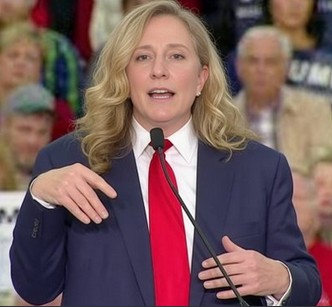
Funniest thing I've read about the Virginia mess. Back when they were hustling the referendum through the assembly both Senators, Warner and Kaine, advised them to go slow and play by the rules. Louise Lucas said she respected them but didn't need advice from the "cuck chair" in the corner. The gerrymandering was overturned and Louise is heading for the big house. Edward G. Robinson voice "where's your cuck now?"
Posted by: Smell the Glove
I posted his post on twitter and it's gotten 25K views so far. Thanks, Smell the Glove
Chris
@chriswithans
"Ahhhhh ahh I put my career on the line for Louise Lucas and Jay Jones thinking they'd vault me into presidential contention and we ended up costing Democrats 20 House seats and unleashing a Reverse Dobbs ahhhhh ahhh"
Something is wrong as I hold you near
Somebody else holds your heart, yeah
You turn to me with your icy tears
And then it's raining, feels like it's raining
-- reportedly a genuine comment offered by a "senior Labour source"
Correction: I wrote that Labour is losing 88% (now 87%) of the seats it is "defending." I think that's wrong. The right way to say it is the seats they are contesting -- that is, they don't necessarily already hold these seats, but they have put up a candidate to run for the seat. It's still very bad but not as bad as losing 87% of the seats they already held.
Basil the Great
@BasilTheGreat
🚨ED MILIBAND [a Minister in Starmer's government] SAYS KEIR STARMER WILL RESIGN AS PRIME MINISTER
He has reportedly reassured Labour MP's that Starmer will be resigning following the disastrous results tonight
It's over
Incidentally, the only reason this didn't already happen in the US is because of the Very Bad Orange Man (who is right on 85% of all policy calls and extremely, existentially right on 15% of them)
Only a cult does this.
Annunziata Rees-Mogg
@zatzi
If this continues Labour loses 2,148 seats tonight.
That is much worse than the worst case predictions I’ve seen.
Cataclysmic
Update: They've now lost 88% of the seats they're defending. As I mentioned earlier, I think I heard that London will not bail them out, as many of those Labour seats will probably flip to "Muslim Independent" or Green. Detroit's 5am vote will not save them.
The British Patriot
@TheBritLad
🚨 BREAKING: Labour have lost 80% of all seats contested as of 2:25 AM.<
br> If this continues, Keir Starmer will be out of office next week.
Reform has surged and projected to pick up between 1700-2100 seats.
Wow, up to 1700-2100 seats. It's not incredible that this is happening. It's incredible that the Davos crowd is so absolutely determined to privilege Muslim "migrants" over the actual native population who elects them, no matter how loudly the natives scream that they want to be prioritized, that they will gladly self-extinguish as a party rather than simply representing the interests of their own voters. Astonishing.
Remember, when they call other people "cultists" -- they are the ones so imprisoned in their social reinforcement and discipline bubbles that they will choose political death rather than dare upset the Karen Enforcement Officers of their cult.
Update: Now they've lost 83% of the seats they were defending.
(((Dan Hodges)))
@DPJHodges
Reform are basically wiping Labour out in the North. It's not a defeat. It's not even a rout. Labour are simply ceasing to exist.
Nick Lowles
@lowles_nick
Tonight’s results are calamitous for Labour. Not just for Keir Starmer's leadership, but for the very future of the party
Update: Reform now up 145, Labour down 98.
Labour projected to lose Wales -- where they've ruled for 27 years.
Fulton County Georgia just discovered 400 boxes of ballots for Labour
Update: REF +156, LAB -107, CON -45
Brutal: In four out of five council seats where Labour is defending, they've lost. 80%.
I'm sure it's not this simple, but Reform is straight taking Labour's and the "Conservatives'" seats. They've lost almost exactly what Reform gained. If understand this right (and warning, I probably don't), all of London's council seats are up for election, and Labour might lose hugely there, as their old voters abandon them for Reform, Muslim Indenpendents, and the Greens.
REF +190, LAB -134, CON -56.
People claim that while Labour has adopted the Sharia Agenda to appeal to the million Muslims it allowed to migrate to the country, those voters are ditching Labour to vote for the Muslim Independent Party or the Greens. Delicious. This shadenfreude is going straight to my thighs.
Oh, and if Starmer loses about as badly as expected, Labour will toss him out of a window Braveheart style and replace him. He will announce he is resigning to spend more time with his Gay Ukrainian Male Prostitutes.
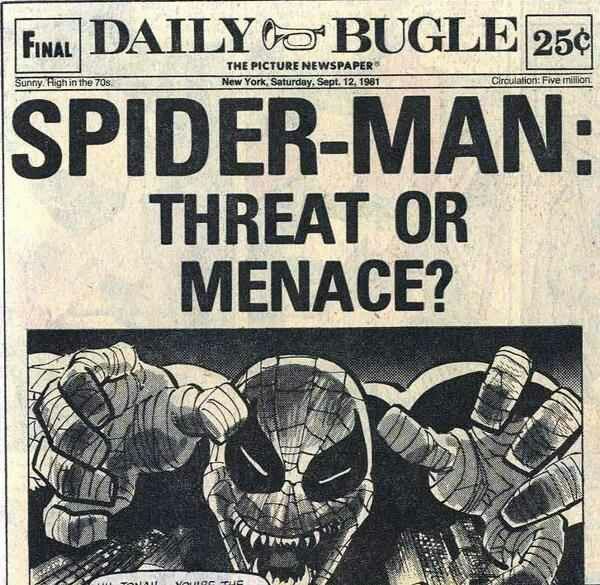
That was written by Denny O'Neill and illustrated by, get this, Frank Miller. Editor to the Stars Jim Shooter was in charge at the time.
I always thought the gag was original to the comic book, but in fact the "Threat or Menace" headline was a satirical joke about media bias and sensationalism for a long while. The Harvard Lampoon used it in a parody of Life magazine: "Flying Saucers: Threat or Menace?"
[Hat Tip: TC] [CBD]

Cicero (@cicero43): "Man, my IQ must be down like 80 points. I must hav ..."
Pug Mahon, Rock 'n' Roll Martian: "This will be my first Mother's Day since my Mom pa ..."
Have you ever thought about like, water?: "Did I keep losing 20 points for every boat? I m ..."
Krebs 'v' Carnot: Epic Battle of the Cycling Stars (TM) Imprison! Imprison! Imprison! : "[i] "I Fell for the Bullshit About the Wonders of ..."
mindful webworker - but it does move!: "🛸Speaking of extraterrestrial secrets T ..."
Gotta think sales and marketing: "How about a "I Fell for the Bullshit About the ..."
JackStraw: ">>d. Buying a boat. Did I keep losing 20 points ..."
Krebs 'v' Carnot: Epic Battle of the Cycling Stars (TM) Imprison! Imprison! Imprison! : " Fuck Off, You Perverts Day fixed! ..."
Berserker-Dragonheads Division: "Holy carp. Seattle media is promoting Other’ ..."
Krebs 'v' Carnot: Epic Battle of the Cycling Stars (TM) Imprison! Imprison! Imprison! : "[i] The crew took photos. Posted by: publius, Ra ..."
four seasons: " Howz about Fuck Off Day you perverts. ..."
RI Red's Blog!
Behind The Black
CutJibNewsletter
The Pipeline
Second City Cop
Talk Of The Town with Steve Noxon
Belmont Club
Chicago Boyz
Cold Fury
Da Goddess
Daily Pundit
Dawn Eden
Day by Day (Cartoon)
EduWonk
Enter Stage Right
The Epoch Times
Grim's Hall
Victor Davis Hanson
Hugh Hewitt
IMAO
Instapundit
JihadWatch
Kausfiles
Lileks/The Bleat
Memeorandum (Metablog)
Outside the Beltway
Patterico's Pontifications
The People's Cube
Powerline
RedState
Reliapundit
Viking Pundit
WizBang
Thanksgivingmanship: How to Deal With Your Spoiled Stupid Leftist Adultbrat Relatives Who Have Spent Three Months Reading Slate and Vox Learning How to Deal With You
You're Fired! Donald Trump Grills the 2004 Democrat Candidates and Operatives on Their Election Loss
Bizarrely I had a perfect Donald Trump voice going in 2004 and then literally never used it again, even when he was running for president.
A Eulogy In Advance for Former Lincoln Project Associate and Noted Twitter Pestilence Tom Nichols
Special Guest Blogger Rich "Psycho" Giamboni: If You Touch My Sandwich One More Time, I Will Fvcking Kill You
Special Guest Blogger Rich "Psycho" Giamboni: I Must Eat Jim Acosta
Special Guest Blogger Tom Friedman: We Need to Talk About What My Egyptian Cab Driver Told Me About Globalization Shortly Before He Began to Murder Me
Special Guest Blogger Bernard Henri-Levy: I rise in defense of my very good friend Dominique Strauss-Kahn
Note: Later events actually proved Dominique Strauss-Kahn completely innocent. The piece is still funny though -- if you pretend, for five minutes, that he was guilty.
The Ace of Spades HQ Sex-for-Money Skankathon
A D&D Guide to the Democratic Candidates
Michael Moore Goes on Lunchtime Manhattan Death-Spree
Artificial Insouciance: Maureen Dowd's Word Processor Revolts Against Her Numbing Imbecility
The Dowd-O-Matic!
The Donkey ("The Raven" parody)
- May 2026
- April 2026
- March 2026
- February 2026
- January 2026
- December 2025
- November 2025
- October 2025
- September 2025
- August 2025
- July 2025
- June 2025
- May 2025
- April 2025
- March 2025
- February 2025
- January 2025
- December 2024
- November 2024
- October 2024
- September 2024
- August 2024
- July 2024
- June 2024
- May 2024
- April 2024
- March 2024
- February 2024
- January 2024
- December 2023
- November 2023
- October 2023
- September 2023
- August 2023
- July 2023
- June 2023
- May 2023
- April 2023
- March 2023
- February 2023
- January 2023
- December 2022
- November 2022
- October 2022
- September 2022
- August 2022
- July 2022
- June 2022
- May 2022
- April 2022
- March 2022
- February 2022
- January 2022
- December 2021
- November 2021
- October 2021
- September 2021
- August 2021
- July 2021
- June 2021
- May 2021
- April 2021
- March 2021
- February 2021
- January 2021
- December 2020
- November 2020
- October 2020
- September 2020
- August 2020
- July 2020
- June 2020
- May 2020
- April 2020
- March 2020
- February 2020
- January 2020
- December 2019
- November 2019
- October 2019
- September 2019
- August 2019
- July 2019
- June 2019
- May 2019
- April 2019
- March 2019
- February 2019
- January 2019
- December 2018
- November 2018
- October 2018
- September 2018
- August 2018
- July 2018
- June 2018
- May 2018
- April 2018
- March 2018
- February 2018
- January 2018
- December 2017
- November 2017
- October 2017
- September 2017
- August 2017
- July 2017
- June 2017
- May 2017
- April 2017
- March 2017
- February 2017
- January 2017
- December 2016
- November 2016
- October 2016
- September 2016
- August 2016
- July 2016
- June 2016
- May 2016
- April 2016
- March 2016
- February 2016
- January 2016
- December 2015
- November 2015
- October 2015
- September 2015
- August 2015
- July 2015
- June 2015
- May 2015
- April 2015
- March 2015
- February 2015
- January 2015
- December 2014
- November 2014
- October 2014
- September 2014
- August 2014
- July 2014
- June 2014
- May 2014
- April 2014
- March 2014
- February 2014
- January 2014
- December 2013
- November 2013
- October 2013
- September 2013
- August 2013
- July 2013
- June 2013
- May 2013
- April 2013
- March 2013
- February 2013
- January 2013
- December 2012
- November 2012
- October 2012
- September 2012
- August 2012
- July 2012
- June 2012
- May 2012
- April 2012
- March 2012
- February 2012
- January 2012
- December 2011
- November 2011
- October 2011
- September 2011
- August 2011
- July 2011
- June 2011
- May 2011
- April 2011
- March 2011
- February 2011
- January 2011
- December 2010
- November 2010
- October 2010
- September 2010
- August 2010
- July 2010
- June 2010
- May 2010
- April 2010
- March 2010
- February 2010
- January 2010
- December 2009
- November 2009
- October 2009
- September 2009
- August 2009
- July 2009
- June 2009
- May 2009
- April 2009
- March 2009
- February 2009
- January 2009
- December 2008
- November 2008
- October 2008
- September 2008
- August 2008
- July 2008
- June 2008
- May 2008
- April 2008
- March 2008
- February 2008
- January 2008
- December 2007
- November 2007
- October 2007
- September 2007
- August 2007
- July 2007
- June 2007
- May 2007
- April 2007
- March 2007
- February 2007
- January 2007
- December 2006
- November 2006
- October 2006
- September 2006
- August 2006
- July 2006
- June 2006
- May 2006
- April 2006
- March 2006
- February 2006
- January 2006
- December 2005
- November 2005
- October 2005
- September 2005
- August 2005
- July 2005
- June 2005
- May 2005
- April 2005
- March 2005
- February 2005
- January 2005
- December 2004
- November 2004
- October 2004
- September 2004
- August 2004
- July 2004
- June 2004
- May 2004
- April 2004
- December 0000