
Intermarkets' Privacy Policy
Donate to Ace of Spades HQ!
aceofspadeshq at gee mail.com
Buck:
buck.throckmorton at protonmail.com
CBD:
cbd at cutjibnewsletter.com
Doof:
doof2112 at proton.me
joe mannix:
mannix2024 at proton.me
MisHum:
petmorons at gee mail.com
J.J. Sefton:
sefton at cutjibnewsletter.com
Tuesday Overnight Open Thread - October 13, 2026
Dogs Making Friends Cafe
Abdulrahman Mohamed El-Sayed's Mother Was an Active Member of the Muslim Brotherhood In College
TikTok Feminists Try to Cancel Shane Gillis Again, This Time for Stating the True Fact that Slutty Women are Dressing Like Whores at the Gym
Feds: We Have Probable Cause to Show That America's Sweetheart Ilhan "Omar" Committed Immigration Crimes
Democrats to Kamala Harris: Get Bent and Get Lost
UK Prime Cuck Andy Burnham: Iran's Terrorist Army the IRGC Was "Almost Certainly" Behind the Seven Shirtless Men Casing the Air Force Base
Former Fox Host and Wife of Grifter Gavin Newsom, Kimberly Guilfoyle, Resigns as Ambassador to Greece After Caught Asking for $100,000
The Mystery of the Talarico Disappearance
Jon Ekdahl 2026
Jay Guevara 2025
Jim Sunk New Dawn 2025
Jewells45 2025
Bandersnatch 2024
GnuBreed 2024
Captain Hate 2023
moon_over_vermont 2023
westminsterdogshow 2023
Ann Wilson(Empire1) 2022
Dave In Texas 2022
Jesse in D.C. 2022
OregonMuse 2022
redc1c4 2021
Tami 2021
Chavez the Hugo 2020
Ibguy 2020
Rickl 2019
Joffen 2014
maildrop62 at proton dot me
Overnight Open Thread (4-4-2012)
Note that due to a death in the family I will be away until next week.
The Falklands War: 30 Years Later
It was almost exactly 30 years ago today that Argentine forces invaded the Falklands Islands leading to the Falklands War. By June Britain had defeated the Argentinian Navy and Air Force and finally retook the islands. But it was a far closer run thing than many recognized at the time. And tensions are once again rising in the South Atlantic but both countries are much weaker than they were:
Both sides today field such smaller fleets of ships and aircraft that it's hard to imagine commanders risking them in a stand-up fight. The Royal Navy escaped by the skin of its teeth in the Falklands - "six better fuses and we'd have lost," as the quip held - and neither it nor the Argentines could absorb the same losses today.
And Philip Ewing draws some lessons from war that still apply:
The fight you plan for may not be the fight you get: The Royal Navy of the early 1980s was shaped with an eye to protecting transatlantic convoys in World War III against the Soviets, not expeditionary amphibious campaigns. Among other things, this meant its air defenses were not ideal - commanders had to pair frigates and destroyers in miniature pickets to compensate for the gaps in the other ships' sensors. That also meant Argentine pilots could fly in low and score hits on the British fleet in San Carlos Water, although, luckily for the British, several of their bombs did not explode.You've got to fight with what you have: The Royal Navy got rid of its last traditional aircraft carrier in 1978, leaving it only with the "Harrier carriers" HMS Hermes and HMS Invincible when the Falklands erupted. The Hermes was very old and the Invincible was originally designed for anti-submarine warfare - and neither could field the vital airborne early warning aircraft the navy once had. So commanders had to make do with repurposed ships flying a handful of repurposed aircraft to defend the task group with very limited domain awareness. It worked, but only just.
Your losses are going to be worse than you think: ...The war cost more than 100 Argentine aircraft, according to John Roberts' history of the Royal Navy, "Safeguarding the Nation," as well as its cruiser General Belgrano, a submarine and other vessels. And a single loss can have disproportionate consequences, as with the sinking of the cargo ship Atlantic Conveyor, which carried the helicopters British troops were counting on to carry them across the Falklands. Without them, they had to walk.
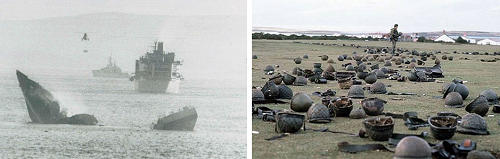
Also: Why Thostaer defended Gen. Pinochet when he was arrested in London in 1999. It turns out that she was repaying a debt for his vital assistance in 1982.
Israel Considers the "Worst Case" Scenario After Attack on Iran
And the leadership believe that only a few hundred Israelis would be killed in a response:
In the event of an Iranian attack on Israel, less than 300 people would be killed during three weeks of non-stop fighting on multiple fronts, according to estimates delivered to the security cabinet in a briefing, Channel 10 reported on Monday. According to the estimates, described as a worst-case scenario, thousands of missiles would be launched toward Israel from Lebanon, Syria and Gaza as part of the Iranian attack. The scenario took into account Israel's defenses as of 2012, with the Iron Dome rocket-defense system not yet at its full deployment.
And if that seems rather cavalier, then watch this video and consider what you would do in the same circumstances. Warning: May be disturbing.
"During times of universal deceit, telling the truth becomes a revolutionary act."-- George Orwell
It's worth noting that academic studies find that tax evasion is driven largely by high tax rates. This makes sense since there is more incentive to hide money when the government is being very greedy. But there is also evidence that tax evasion rises when people perceive that government is wasting money and being corrupt.Heck, no wonder the Irish people are up in arms. They're being asked to cough up more money to finance a bailout that was both corrupt and wasteful.
"I never had an interest in being a mayor 'cause that's a real job. You have to produce. That's why I was able to be a senator for 36 years."-- Joe Biden
It was also thirty years ago that Atari declared national Pac-Man Day.
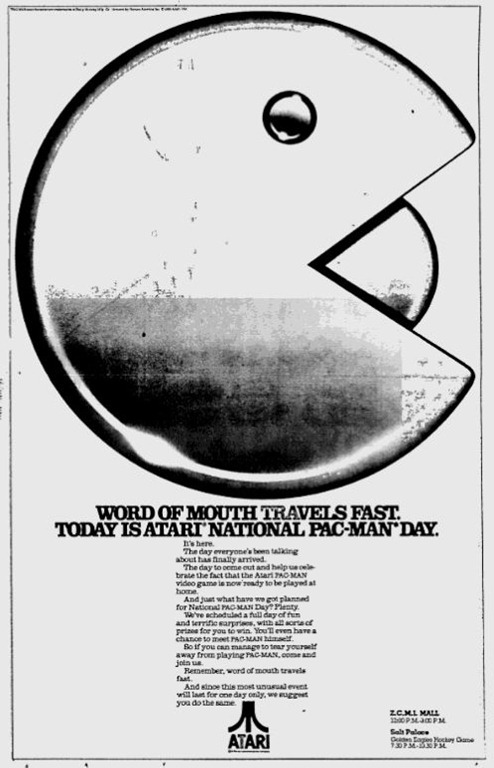
Even a little bit to the left.
After initially disqualifying Talackova, organizers of the Miss Universe beauty pageant reversed course late Monday, saying she can participate.In a statement, the Miss Universe Organization said Jenna Talackova can compete provided "she meets the legal gender recognition requirements of Canada, and the standards established by other international competitions."
The statement, however, did not elaborate on what the requirements were.

Teh Tweet!
Tonight's post brought to you by pre-island Ginger:

Notice: Posted by permission of AceCorp LLC. Please e-mail overnight open thread tips to maetenloch at gmail. Otherwise send tips to Ace.

SpeakingOf: "They had a jumbotron, but it was run off wifi and ..."
Skip: "Maybe try and nap a bit ..."
Cow Demon: "289 274 And at a lot of Trump rallies they'll have ..."
Cow Demon: "247: seeing that 100% of Americans are voting for ..."
tcn in AK: "274 And at a lot of Trump rallies they'll have an ..."
Cow Demon: "10 days until the BC election 5 until the AB refe ..."
SpeakingOf: "284 She knew how to kill her kid. She knew how to ..."
SpeakingOf: "And then I finally scroll up and realize the Catho ..."
Megadeath McPeterson: "At least my parents had some taste in music. ..."
Braenyard - some Absent Friends are more equal than others _ : "She knew how to kill her kid. She knew how to kil ..."
SpeakingOf: "How many times did she stab her husband? Did she w ..."
Tuesday Overnight Open Thread - October 13, 2026
Dogs Making Friends Cafe
Abdulrahman Mohamed El-Sayed's Mother Was an Active Member of the Muslim Brotherhood In College
TikTok Feminists Try to Cancel Shane Gillis Again, This Time for Stating the True Fact that Slutty Women are Dressing Like Whores at the Gym
Feds: We Have Probable Cause to Show That America's Sweetheart Ilhan "Omar" Committed Immigration Crimes
Democrats to Kamala Harris: Get Bent and Get Lost
UK Prime Cuck Andy Burnham: Iran's Terrorist Army the IRGC Was "Almost Certainly" Behind the Seven Shirtless Men Casing the Air Force Base
Former Fox Host and Wife of Grifter Gavin Newsom, Kimberly Guilfoyle, Resigns as Ambassador to Greece After Caught Asking for $100,000
The Mystery of the Talarico Disappearance
Paul Anka Haiku Contest Announcement
Integrity SAT's: Entrance Exam for Paul Anka's Band
AllahPundit's Paul Anka 45's Collection
AnkaPundit: Paul Anka Takes Over the Site for a Weekend (Continues through to Monday's postings)
George Bush Slices Don Rumsfeld Like an F*ckin' Hammer
Democratic Forays into Erotica
New Shows On Gore's DNC/MTV Network
Nicknames for Potatoes, By People Who Really Hate Potatoes
Star Wars Euphemisms for Self-Abuse
Signs You're at an Iraqi "Wedding Party"
Signs Your Clown Has Gone Bad
Signs That You, Geroge Michael, Should Probably Just Give It Up
Signs of Hip-Hop Influence on John Kerry
NYT Headlines Spinning Bush's Jobs Boom
Things People Are More Likely to Say Than "Did You Hear What Al Franken Said Yesterday?"
Signs that Paul Krugman Has Lost His Frickin' Mind
All-Time Best NBA Players, According to Senator Robert Byrd
Other Bad Things About the Jews, According to the Koran
Signs That David Letterman Just Doesn't Care Anymore
Examples of Bob Kerrey's Insufferable Racial Jackassery
Signs Andy Rooney Is Going Senile
Other Judgments Dick Clarke Made About Condi Rice Based on Her Appearance
Collective Names for Groups of People
John Kerry's Other Vietnam Super-Pets
Cool Things About the XM8 Assault Rifle
Media-Approved Facts About the Democrat Spy
Changes to Make Christianity More "Inclusive"
Secret John Kerry Senatorial Accomplishments
John Edwards Campaign Excuses
John Kerry Pick-Up Lines
Changes Liberal Senator George Michell Will Make at Disney
Torments in Dog-Hell
The Ace of Spades HQ Sex-for-Money Skankathon
A D&D Guide to the Democratic Candidates
Margaret Cho: Just Not Funny
More Margaret Cho Abuse
Margaret Cho: Still Not Funny
Iraqi Prisoner Claims He Was Raped... By Woman
Wonkette Announces "Morning Zoo" Format
John Kerry's "Plan" Causes Surrender of Moqtada al-Sadr's Militia
World Muslim Leaders Apologize for Nick Berg's Beheading
Michael Moore Goes on Lunchtime Manhattan Death-Spree
Milestone: Oliver Willis Posts 400th "Fake News Article" Referencing Britney Spears
Liberal Economists Rue a "New Decade of Greed"
Artificial Insouciance: Maureen Dowd's Word Processor Revolts Against Her Numbing Imbecility
Intelligence Officials Eye Blogs for Tips
They Done Found Us Out, Cletus: Intrepid Internet Detective Figures Out Our Master Plan
Shock: Josh Marshall Almost Mentions Sarin Discovery in Iraq
Leather-Clad Biker Freaks Terrorize Australian Town
When Clinton Was President, Torture Was Cool
What Wonkette Means When She Explains What Tina Brown Means
Wonkette's Stand-Up Act
Wankette HQ Gay-Rumors Du Jour
Here's What's Bugging Me: Goose and Slider
My Own Micah Wright Style Confession of Dishonesty
Outraged "Conservatives" React to the FMA
An On-Line Impression of Dennis Miller Having Sex with a Kodiak Bear
The Story the Rightwing Media Refuses to Report!
Our Lunch with David "Glengarry Glen Ross" Mamet
The House of Love: Paul Krugman
A Michael Moore Mystery (TM)
The Dowd-O-Matic!
Liberal Consistency and Other Myths
Kepler's Laws of Liberal Media Bias
John Kerry-- The Splunge! Candidate
"Divisive" Politics & "Attacks on Patriotism" (very long)
The Donkey ("The Raven" parody)