Ace: aceofspadeshq at gee mail.com
Buck: buck.throckmorton at protonmail.com
CBD: cbd at cutjibnewsletter.com
Doof: doof2112 at proton.me
joe mannix: mannix2024 at proton.me
MisHum: petmorons at gee mail.com
J.J. Sefton: sefton at cutjibnewsletter.com
A site for members of the Horde to post their stories seeking beta readers, editing help, brainstorming, and story ideas. Also to share links to potential publishing outlets, writing help sites, and videos posting tips to get published.
Contact OrangeEnt for info: maildrop62 at proton dot me
Sunday Morning Book Thread - 11-29-2026 ["Perfessor" Squirrel]
(Library Book Sale Day 1)
(Library Book Sale Day 2)
Welcome to the prestigious, internationally acclaimed, stately, and illustrious Sunday Morning Book Thread! The place where all readers are welcome, regardless of whatever guilty pleasure we feel like reading. Here is where we can discuss, argue, bicker, quibble, consider, debate, confabulate, converse, and jaw about our latest fancy in reading material. As always, pants are required, unless you are wearing these pants*...
So relax, find yourself a warm kitty (or warm puppy--I won't judge) to curl up in your lap, wake up from your tryptophan-induced coma, and crack open a new book. What are YOU reading this fine morning?
PIC NOTE
Well, I suppose it was inevitable.
The local public library book sale happened the week before Thanksgiving. Did I limit myself to just going to "Friends of the Library" night on Thursday? No, of course not. I went back for a second round Friday morning. Sigh. When am I going to learn my lesson, if there is a lesson to be learned?
For the past few times I've gone I've run into a former colleague who used to work at the same university where I currently work. She was in a different department, but I often collaborated with her. She's retired now, but it's nice to see her now and again (almost always at the library book sales). I also ran into an interesting gentleman this last time who enjoyed sharing his love of literature with us. Don't know his name, but he loves books.
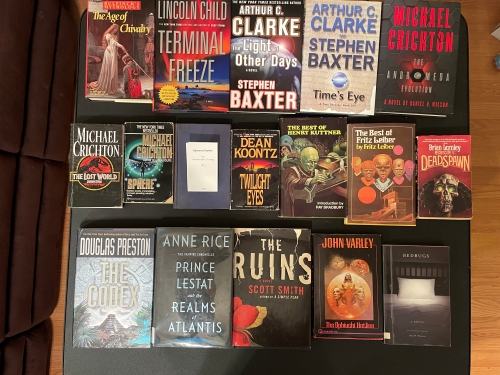
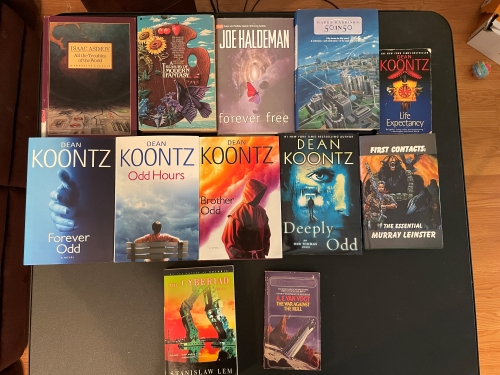
So here's a list of what I picked up in case you can't tell from the images above...
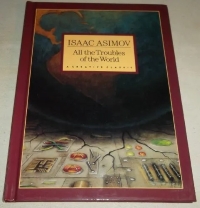
All the Troubles of the World by Isaac Asimov -- This is more of a short story bound in hardcover, with some illustrations accompanying the story.
Bullfinch's Mythology -- Age of Chivalry and Legends of Charlemagne -- This is basically a collection of classic Arthurian legends along with some other stories related to French chivalric traditions.
A Treasury of Modern Fantasy edited by Terry Carr and Martin H. Greenberg -- "Modern" in this context is somewhat relative as this anthology was published in 1981. The first story in the anthology was published in 1924 ("The Rats in the Walls" by H. P. Lovecraft). Lots of great authors. Admittedly, I probably have most of the stories in other various anthologies.
Terminal Freeze by Lincoln Child -- He's always good for an entertaining thrill ride. This is a classic tale of scientists waking up *something* that should have stayed buried deep in the Artic ice...
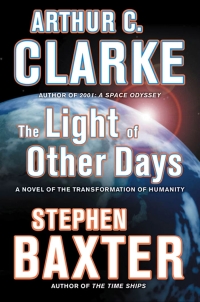
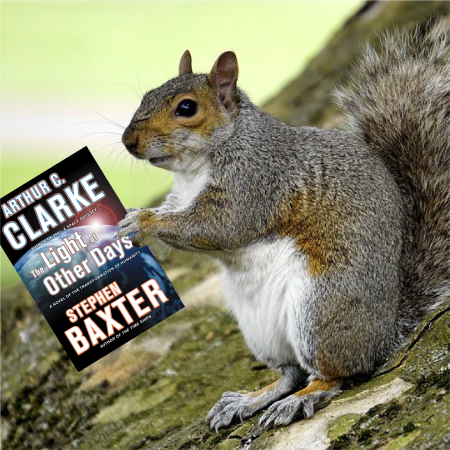
The Light of Other Days by Arthur C. Clarke and Stephen Baxter -- They've collaborated on a few novels. I could swear the plot for this book sounds like it was based on a short story I've read, but I can't quite place who wrote it.
A Time Odyssey Book One: Time's Eye by Arthur C. Clarke and Stephen Baxter -- Just from the book blurb, I can tell this is going to be a wild ride as famous figures from history (and the future) collide with one another...
The Andromeda Evolution by Michael Crichton and Daniel H. Wilson -- This is the sequel to Crichton's famous novel, The Andromeda Strain. Wilson wrote most of the story, but it sounds like it might be based on Crichton's notes that he may have written before he passed away. Not sure. Either way, I'm looking forward to reading it, though I haven't read the first book (yet).
The Lost World by Michael Crichton -- The sequel to Jurassic Park.
Sphere by Michael Crichton -- I used to have this book a long time ago, but I gave it away or sold it or something. Now I have it again. I remember watching the movie, but wasn't too impressed with the movie. I think the book will be better on a re-read (I hope).
Edward Dantes by Alexander Dumas -- The sequel to The Count of Monte Cristo, which I should probably get around to reading sometime. I hear that's highly recommended by the Moron Horde. Anyone read this one?
Forever Free by Joe Haldeman -- The sequel to The Forever War. When you live your life traveling at relativistic speeds, you'll find that the universe will leave you behind. How do you adjust to the new world when you stop traveling?
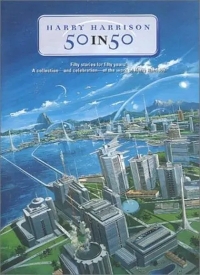
50 in 50 by Harry Harrison -- A collection of 50 of Harry Harrison's short stories, one for each year in which it was published. I thought that was a cool idea for a collection of an author's short stories.
Forever Odd by Dean Koontz -- This was part of a four-book bundle of Odd Thomas books. Turns out I already owned two of the books, but I was able to get two books I don't have for less than the cost of the two books individually. Still a good deal!
Brother Odd by Dean Koontz -- (Already own this one!)
Odd Hours by Dean Koontz
Deeply Odd by Dean Koontz -- (Already own this one!)
Life Expectancy by Dean Koontz
Twilight Eyes by Dean Koontz
The Best of Henry Kuttner by Henry Kuttner -- Turns out I already own this one under a different title (The Last Mimsy), which I bought shortly after the movie based on one his stories was released. Oh, well. Now I have a hard cover Book Club edition.
The Best of Fritz Leiber by Fritz Leiber -- A collection of short stories from the creator of the sword-and-thievery duo of Fafhrd and the Grey Mouser
First Contacts: The Essential Murray Leinster by Murray Leinster -- Leinster was thinking about artificial intelligence and the internet decades before any of us had even heard of those things...
The Cyberiad by Stanislaw Lem -- I've heard of Lem, but have never read any of his works. Now is my chance to rectify that problem.
Necroscope V: Deadspawn by Brian Lumley -- Part of Lumley's long-running Necroscope series, where Harry Keogh communicates with the dead and battle vampiric beings from alternate dimensions...
The Codex by Douglas Preston -- Like Lincoln Child, Preston can hold his own as a solo author with a thrillng and entertaining story
Prince Lestat and the Realms of Atlantis by Anne Rice -- I have not read much Anne Rice, but this one sounded mildly interesting. It's part of her long-running Vampire Chronicles.
The Ruins by Scott Smith -- The novel upon which the movie by the same name is based. The movie has a fair amount of body horror, which is unpleasant. I'm not as squeamish about that in novel form...
The War against the Rull by A. E. Van Vogt -- Another classic science fiction author I've heard of, but have never read. It should be a short, fast read.
The Ophiuchi Hotline by John Varley -- His first published novel. It should be a quick read, as it's also quite short.
Bedbugs by Ben H. Winters -- Nothing like reading about bedbugs from hell right before you crawl into bed! Sleep tight! Dont let THESE bedbugs bite!
MAINTAINING A SENSE OF WONDER
Tristan points out that reading is about maintaining our sense of wonder even into adulthood. Now, I know that many folks around here aren't into reading fantasy/science fiction, but that doesn't mean you can't experience wonder when reading histories, biographies, scientific books, and so forth. If anything, that sense of wonder should be enhanced as you read TRUE stories about things that ACTUALLY happened, often in very funny and surprising ways that no one at the time could have predicted. Truth can often be stranger than fiction, after all, and writers often use historical events as inspiration for their more fantastical ideas. The more I've learned about physics, the more in awe I am at the incredible cosmos that God created for us. I'm also very impressed at the extraordinary cleverness of us hairless apes as we develop new and improved technologies. No single person on planet Earth can fully grasp the scope and complexity of the world that surrounds us every moment of every day.
One of the points Tristan makes through his quotation of J.M. Barrie's Peter Pan is that each of us carries around with us our own personal "Neverland," an imaginary world populated by the people, places and things that capture our own imagination. Other authors encourage us to do the same. For instance, in The Voyage of the Dawn Treader by C. S. Lewis, Eustace Scrubb is frequently described as reading the wrong sort of books that make him a terrible traveling companion to Edmund and Lucy, since Eustace effectively has no imagination when he begins his adventure. He learns by the end, though, and thus becomes the main protagonist in The Silver Chair as an experienced Narnian traveller when Jill Pole is brought along for the ride. Michael Ende's realm of Fantastica in The Neverending Story is the land where ALL stories become true, and it's growing all the time because humans are always telling new stories to one another, which is the only way that Fantastica can grow. When humans lose their sense of wonder, it becomes a literal existential threat to Fantastica--the Nothing comes along to wipe out Fantastica forever.
So always be wondering, always be dreaming, and never, ever stop imagining!
++++++++++
++++++++++
IRON LAW OF BOOK SHELVES
I don't know about y'all, but I may have discovered a hidden law of the universe. Whenever my bookshelves start overflowing I go out and buy some more shelves. OK, easy enough. I then have a little bit of wriggle room for more books. However, within a very short period of time, I find that I've suddenly filled up my bookshelves again. How did that happen so quickly?
Now I'm at the point where I have to make some tough decisions. My house has NO MORE ROOM for books. I have shelves in my dining area full of books. My living room is full of bookshelves. My library room is full of bookshelves. My bedroom has bookshelves that are completely full. Same with my office. I don't know where I could squeeze in any more books.
At some point I expect I will reach critical mass of books and either spontaneous fusion will begin, or I'll go beyond that and my house will collapse into a black hole.
Author Terry Pratchett famously developed a theory of "L-Space." L-Space is formed when the density of knowledge and information is so great that you can tear holes in spacetime, creating wormholes to any other similar location. Thus, all libraries and bookstores are connected through L-Space. A knowledgeable Librarian can make use of these passageways behind reality to travel to the past, though they have to be careful not to encounter themselves, as that leads to a variety of spatiotemporal problems.
I don't think my library will ever achieve that level of knowledge density, but who knows? Don't be too surprised if I show in your own library some day, looking for a good book to read!
MORON RECOMMENDATIONS
Last Days by Brian Evenson in preparation for the follow-up, Phantom Limb.
Last Days is a horror-detective novel concerning an apocalyptic amputation cult.
I would consider it to be a great novel with horror in the Kafka, Borges, Gogol tradition. Not to mention violence in the hardboiled detective novel tradition.
It's a book that does something I like. It's a very smart book in which the author does not pop-up to give you his opinion from on high but rather presents interesting ideas as a consequence of the action, plot, and some dialogue.
Great stuff...if you enjoy creepy horror.
Posted by: naturalfake at November 22, 2026 09:20 AM (YSUhf)
Comment: There is a form of body dysmorphia where people do voluntary seek to have their limbs amputated. It's a very disturbing mental illness, no doubt related to the transperson epidemic we see these days. The idea of an apocalyptic cult that glorifies the practice is definitely one of those things that should fill us with horror. Believe it or not, Brian Evenson is NOT the only author that describes this idea. F. Paul Wilson's Secret History of the World features a Japanese cult that also engages in ritual amputation towards an apocalyptic end. The more senior members of the cult are nothing more than heads and torsos. They even blind themselves so they can focus all their attention inwards. Very dark stuff.
Just finished John McManus' trilogy of the Army in the Pacific War (last one titled "To The End of the Earth").
Highly recommended. Writing style that draws you effortlessly through the story, and a nice balance of Big Picture and Big Name details with individual accounts from letters, diaries, and memoirs.
McManus is a dedicated Army historian and one mission with this trilogy was to fill out/correct understanding of the Pacific War, specifically that the Army was a major, in fact larger, player than the Marine Corps, which generally is the central player in the popular understanding.
One thing I like about his approach is his inclusion of logistics in recounting major operations. The story of US logistics in WWII deserves books of its own, especially if they covered the incredible industrial mobilization underlying it all.
Posted by: rhomboid at November 22, 2026 11:23 AM (U/Byj)
Comment: It's fairly common knowledge that an army marches on its stomach. In other words, logistics is the key to winning a war (assuming the goal IS to win). For every soldier in the front lines, there are dozens of people working behind the scenes to provide the front-line units with logistical support. Hauling all that stuff across entire oceans is truly an incredible feat of planning and execution. Now we expect it as a matter of course thanks to companies like Amazon, which has mastered the art of logistics to an absurd degree. With Musk's rocket technology, we can even make regular deliveries to the International Space Station on a routine basis. We truly live in an age of wonders.
In addition to the books I picked up at a library book sale, I also ordered three books based on some of the books I acquired above. As I've mentioned before, I'm a "completionist," meaning I tend to acquire all the books that are part of a series. I guess it's a compulsion...
Time Odyssey Book 2 - Sunstorm by Arthur C. Clarke and Stephen Baxter
Time Odyssen Book 3 - Firstborn by Arthur C. Clarke and Stephen Baxter
The Andromeda Strain by Michael Crichton -- One of the classics of science fiction dealing with an alien virus that crashlands on Earth, wiping out an entire American town...
WHAT I'VE BEEN READING RECENTLY
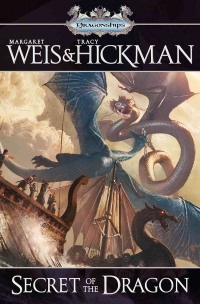
Dragonships Book 2 - Secret of the Dragon by Margaret Weis and Tracy Hickman
As I expected Weis and Hickman are able to show Skylan's character development. In the first book he was a complete idiot, borderline retarded. However, due to the setbacks he experienced at the end of that book, he's discovered he has to start *thinking* before he acts, which leads to him making slightly more rational decisions in the second book. He and his shipmates are enslaved and carried off to a foreign land (Rome, basically), where they are expected to compete in a strategy/gladiatorial game for the pleasure of their captors. Meanwhile, one of their captors is strategizing his way into becoming even more powerful, but needs the help of Skylan and his allies.
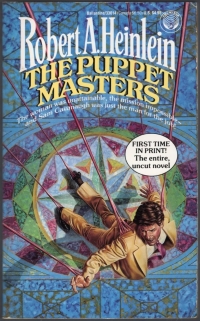
The Puppet Masters by Robert A. Heinlein
I first read this as a teenager and really enjoyed it. Now that I'm much older, I gave it a re-read based on a recent Moron Recommendation. Although I still thought it was entertaining, it really doesn't hold up very well. It takes place in the year 2007, but certain technologies are quite lacking, while others are much more advanced. For instance, there are no communication satellites. All radio broadcast transmissions are point-to-point along the surface of the Earth. But they have flying vehicles that are self-driving and can cruise at hundreds of miles per hour. Makes for very odd experience when you realize that the technology of 2007 would no doubt have resolved many of the main problems of the story, but also would have led to others. It's also unclear exactly HOW the "puppet masters" are able to travel through space. They can control other species, but who developed space travel in the first place? Anyway, the story tends to fall apart a bit when you ask too many questions.
All the Troubles in the World by Isaac Asimov
This is a short story that is published in a large hardcover format, with accompanying illustrations. The basic premise is that mankind has created the ultimate AI--Multivac (featured in many of Asimov's short stories). It can answer any question and is smart enough to anticipate crimes before they occur. But what happens when you feed a sentient machine ALL your problems?
Sphere by Michael Crichton
In typical Crichton fashion, this is a technothriller that has a couple of different layers to it. A ship laying network cable in the ocean stumbles across an artifact that defies explanation. A massive aircraft/spacecraft crashed into the South Pacific--at least 300 years before humans developed spaceflight. It appears to be manmade. However, the cargo it picked up is definitely NOT manmade (probably). A scientific team is dispatched to investigate it, of course, and they discover truths about our future, themselves, and things that probably should never be discovered.
Like many of Crichton's stories, Sphere was made into a movie. I remember watching it, but it's largely forgettable. The book, as usual, is better.
The Light of Other Days by Arthur C. Clarke and Stephen Baxter
Although the premise of this book is quite interesting, both Clarke and Baxter can't help themselves about inserting their own militant atheism into the story, which I found quite annoying. The premise is that a tech billionaire discovers how to leverage quantum mechanics to spy on everyone, everywhere, at all times. The technology floods the world and now EVERYONE can see EVERYTHING whenever they want to. No more secrets. Flock cameras on ultimate steroids.
A side effect of this is that people can also peer backwards through time. So they do. And one of the most interesting things to view is the life and death of Jesus Christ, of course. This is where Clarke and Baxter let their inner militant atheism shine, as they "prove" that the storie of Moses (Judaism) and Jesus (Christianity) are based on "lies." Like most militant atheists, they are abject cowards about confronting Mohammad's story, lumping it under "other religions" that have to readjust once people can peer backwards through time.
Overall, it's an interesting story, but they really should NOT have delved into religion...
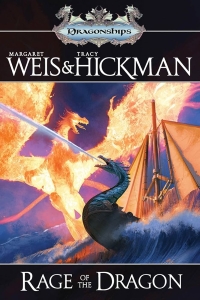
Dragonships Book 3 - Rage of the Dragon by Margaret Weis and Tracy Hickman
Skylan continues his arc of character development. He's still quite a bit dumb in certain situations, especially when he and his companions are captured by a matriarchical society where gender roles are mostly flipped. He doesn't deal with that very well, as he's a stereotypical Norseman, where MEN should be dominant and women submissive (which they really aren't even in his own society--but he's too thick to recognize that). However, he does learn to control himself enough to gain their trust and they provide assistance to him and his companions while they figure out how they can find the rest of the dragon bones they will need to save their people and the world at large.
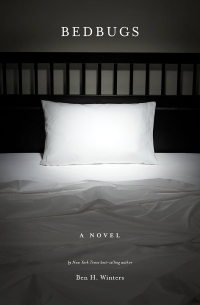
Bedbugs by Ben H. Winters
Bedbugs. Tiny little bloodsuckers that live in the cracks of our houses, coming out at night to feast on us. Very difficult to eradicate. Now Winters gives us a horror story where they are the main antagonists. This is actually a tightly-constructed tale of treachery, betrayal, infidelity, and murder, where the bedbugs are only the manifestation of something much darker--the hidden desires of human depravity.
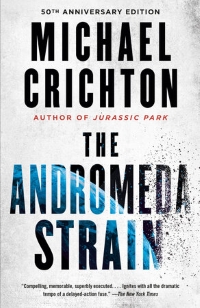
The Andromeda Strain by Michael Crichton
This is Michael Crichton's classic story of a strange alien bug/germ/virus/bacteria that falls to Earth and wipes out a small town in Arizona. Crichton presents this as a "documentary" of sorts, as though these events actually happened and have just now been declassified by the government.
The truth is that the so-called Andromeda Strain defies our human understanding, as it's neither completely alive nor completely autonomous, exhibiting a will and purpose of its own. It's very clear that it is inimical to life on Earth and our entire civilization if it's left to its own devices. Even nuclear weapons can't defeat it.
The Andromeda Evolution by Michael Crichton and Daniel H. Wilson
Daniel H. Wilson collaborated with Michael Crichton's estate to write an authorized sequel to one of Crichton's most famous books. Suppose the Andromeda Strain spent the past fifty years or so hiding on Earth, just biding its time until someone clever enough was able to crack the code and force the Andromeda Strain to move to a new stage in its development. Deep in the Amazon basin, *something* is starting to grow into a massive structure. A team of scientists are dispatched to investigate the "anomaly" and make horrifying discoveries along the way.
This story presents one of the possible solutions to the Fermi Paradox, in a way that has massive implications for the future of the human race.
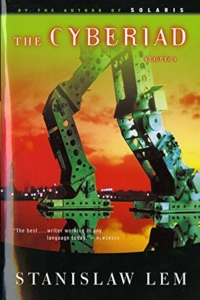
The Cyberiad by Stanislaw Lem
This is a VERY silly book. In all the best ways. Stanislaw Lem is a master of ludicrous prose. Lewis Carroll would be in awe. The Cyberiad is a collection of short stories about the adventures of two "constructors" (i.e., mad scientists) named Trurl and Klapaucius. Trurl is usually the main protagonist, building ridiculous contraptions to make his frenemy jealous of Trurl's capabilities. Trurl construction of an electronic poet nearly destroyed the universe. Though the adding machine he build insisted that 2 + 2 = SEVEN!
Quite an entertaining read if you are in the mood for less serious fare. It's hard to call this "science fiction." Let's just say it's satire with a science fiction veneer.
50 in 50: A Collection of Short Stories - One for Each of Fifty Years by Harry Harrison
Harry Harrison had a long and distinguished career as a science fiction author. To celebrate his first fifty years as an author he collected short stories he'd published over the decades and selected ONE from each of his first fify years as an author. I thought this was a pretty neat concept.
To make things even more interesting he didn't simply arrange the stories in chronological order. Instead he went for a thematic approach, grouping stories by key ideas, such as as alien, inventions, psychological stories, robots, etc.
This is a generally good collection. Several of the stories seem familiar to me, but that's probably because I've encountered them in other anthologies.
Tips, suggestions, recommendations, etc., can all be directed to perfessor -dot- squirrel -at- gmail -dot- com.
The world was doomed, but it kept running anyway.
(Yeah, I know I've used this caption before, but it's oddly appropriate here...)
Disclaimer: Sponsored by His Royal Highness Protuberon Asteristicus, sovereign ruler of the sister globes of Aphelion and Perihelion, hereditary monarch of Aneuria, emperor of all the Monodamites, Biproxicans and Tripartisans, and Grand Duke of Anamandorinth, Glorgonzigor, and Esquacciaccaturbia, Count of the Euscalipii, the Algorissimo, and the Flora del Fortan, Paladin Escutcheoned, Begudgeoned and of the Highest Dudgeon, Baron of Bhm, Wrph, and Clarafoncasterbrackningen, as well as anointed excarch of Ida, Pida, and Adinfinida.
* I'm now contractually obligated to inform you that rickb223 is the sole recipient of a lifetime exemption from the pants rule on the Sunday Morning Book Thread. May God have mercy on us all...