Intermarkets' Privacy Policy
Support
Donate to Ace of Spades HQ!
Contact
Ace:aceofspadeshq at gee mail.com
Buck:
buck.throckmorton at protonmail.com
CBD:
cbd at cutjibnewsletter.com
Doof:
doof2112 at proton.me
joe mannix:
mannix2024 at proton.me
MisHum:
petmorons at gee mail.com
J.J. Sefton:
sefton at cutjibnewsletter.com
Recent Entries
Saturday Evening Movie Thread - 10/24/26
Hobby Thread - November 14, 2026 [TRex]
Ace of Spades Pet Thread, November 14
Gardening, Home and Nature Thread, Nov. 14
The day after Friday The 13th
AoSHQ Weekly Prayer List
Daily Tech News 14 November 2026
God's Own ONT
Friday the 13th Cafe
The Week In Woke
Hobby Thread - November 14, 2026 [TRex]
Ace of Spades Pet Thread, November 14
Gardening, Home and Nature Thread, Nov. 14
The day after Friday The 13th
AoSHQ Weekly Prayer List
Daily Tech News 14 November 2026
God's Own ONT
Friday the 13th Cafe
The Week In Woke
Absent Friends
Captain Whitebread 2026
Jon Ekdahl 2026
Jay Guevara 2025
Jim Sunk New Dawn 2025
Jewells45 2025
Bandersnatch 2024
GnuBreed 2024
Captain Hate 2023
moon_over_vermont 2023
westminsterdogshow 2023
Ann Wilson(Empire1) 2022
Dave In Texas 2022
Jesse in D.C. 2022
OregonMuse 2022
redc1c4 2021
Tami 2021
Chavez the Hugo 2020
Ibguy 2020
Rickl 2019
Joffen 2014
AoSHQ Writers Group
A site for members of the Horde to post their stories seeking beta readers, editing help, brainstorming, and story ideas. Also to share links to potential publishing outlets, writing help sites, and videos posting tips to get published.
Contact OrangeEnt for info:
maildrop62 at proton dot me
maildrop62 at proton dot me
Cutting The Cord And Email Security
Moron Meet-Ups
« Hobby Thread - November 14, 2026 [TRex] |
Main
I've spent the last eight months watching one thing: Hammer Film. Before I started, I knew that Hammer was more than just the horror films that people remember, and I set out to watch it all. All but three films are lost, leaving one hundred seventy films from The Public Life of Henry the Ninth (lost) in 1935 to Doctor Jekyll in 2023. Let's not make too much of the effort though. I'm just an asshole who watches too many movies.
Anyway, I set out with this mission for two reasons. The first is that I had no familiarity with Hammer before (I'd seen two of the recent entries, The Woman in Black and Let Me In, but nothing else from its whole history). The second was that I wanted to discover the history of a studio through its films. I read bits and pieces of the history as I went, but my focus was entirely on the films themselves.
And what I found was what one would expect from a studio that focused on putting out as much as they could, often as cheaply as they could. I found a wide range of content. The bottom is very bad. The top is very good. And there's a lot of mediocrity in between. For every Dracula: Prince of Darkness there were several films like The Full Treatment or Third Party Risk or A Case for PC 49. There were surprise joys like Cloudburst, The Curse of the Werewolf, and Taste of Fear. There were the big names everyone with passing familiarity of Hammer knows like Terence Fisher, Val Guest, Jimmy Sangster, Michael Carreras, Peter Cushing, and Christopher Lee. There were also surprising names who appeared only briefly like Richard Aldrich and Set Holt (who died on the set of his final Hammer film, Blood from the Mummy's Tomb).
What is the story of a studio that made so much crap but also so much quality?
So, this is going to be a long one. I came out with a lot of thoughts.
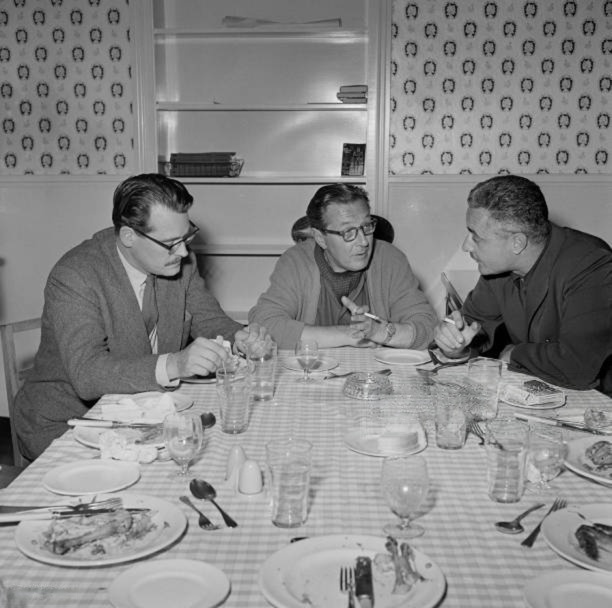
Hammer was many things, but what it was most was what could be derisively called a content mill. It was a small studio that was pushing out more than half a dozen films a year from the early fifties to the early seventies. In the early fifties, Anthony Hinds bought an empty mansion called Down Place on the River Thames and turned it into Bray Studios, the filming home of Hammer for roughly 20 years. They used the exteriors extensively, redressed rooms to use them multiple times in multiple ways for multiple films almost at once, and built sets right on the property, concentrating their abilities to focus production efforts that allowed for fast filming. And fast filming they did.
They could create an air of sophisticated production quality by using the 18th century derelict mansion, its exteriors, and intelligent craftsmanship to outpace comparably budgeted similar films from Hollywood which would have to build such sights from scratch. And the objective of the studio, from long before they squared in on Gothic horror as their bread and butter, was to keep cash flow positive. That meant making product, selling it quickly, and chasing trends to keep the studio afloat. They first filmed at Bray Studios with The Dark Light in 1951 but didn't buy the property and use it in that capacity until Cloudburst...also in 1951. From then on, they pushed out film after film after film, mostly using the space at Bray to make it all happen.
And all of this was driven by the two heads of the studio: Anthony Hinds and Michael Carreras. Creatively, Hinds was more of a writer and Carreras inserted himself into directing from time to time (mostly, it seems, out of necessity when hired directors weren't working out like on Shatter), but they represented two very different overall approaches to the business side of filmmaking. Hinds was more involved on the creative side, and Carreras was more purely the businessman, and together, they steadily grew a stable of creative talent behind and in front of the camera that could flourish in the breakneck pace environment that required a movie every few months.
The early prominent names like Godfrey Grayson interested me because they would start out well (Grayson made The Adventures of PC 49 which I found a small delight), but it was obvious that the pressure just ground any joy of the process out of them (To Have and to Hold, Grayson's final film with Hammer, is a largely dull and unremarkable film). However, those that could work under the pressures like Fisher or Guest really did thrive. Fisher was the more overt visual stylist, bringing wonderful, sumptuous colors to the main monster movies, and Guest was the better overall filmmaker who could morph his way in and out of genres, bringing out the best of them (his two war films for Hammer, Yesterday's Enemy and The Camp on Blood Island are both quite good).
The machine was real. You either flourished, or you got punished with the schedule.
Formula
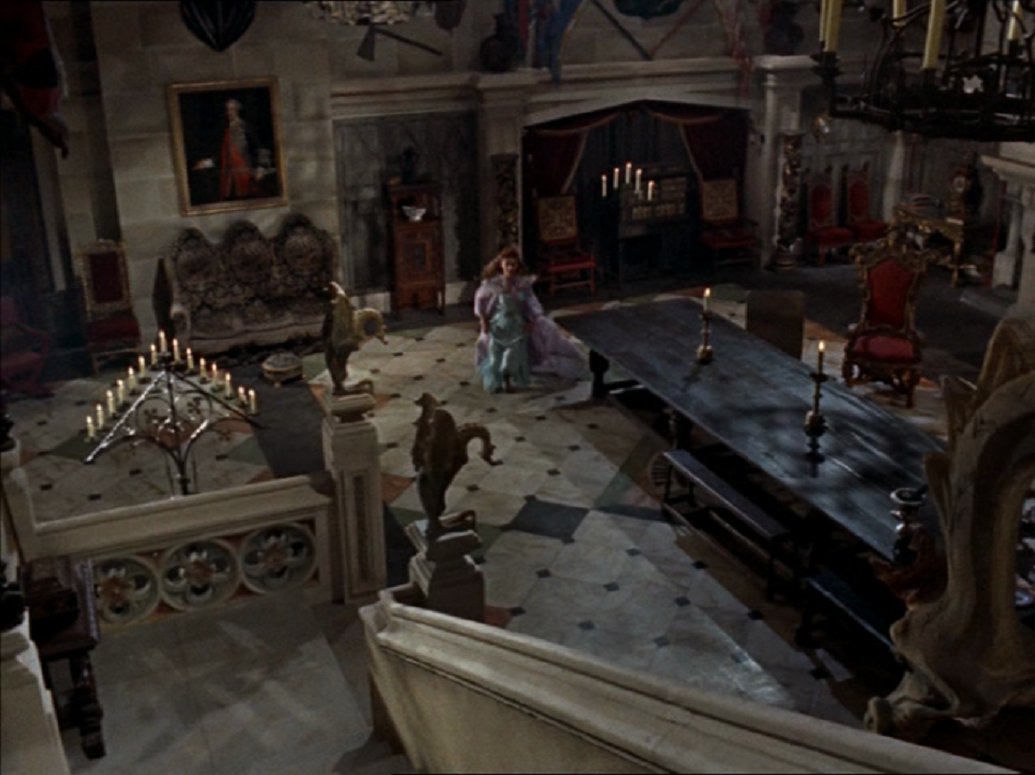
As hinted earlier, Hammer spent its early postwar reconstitution under Anthony Hinds and James Carreras (sons of the original founders William Hinds and Enrique Carreras), James' son Michael would become the more active in the company than James who was an executive director. The company searched for consistent success for years until it decided, in 1957, to make a colorful, a bit gory update of the Frankenstein story which had become something like parody after years under the Universal banner in America. Tapping regular director Terence Fisher (his first film with Hammer was The Last Page in 1952), and taking advantage of the interest of successful television and film actor Peter Cushing, the studio stumbled into what would define it: Gothic Horror.
The Curse of Frankenstein was a success. A major success. And success breeds imitation, and within a year, Hammer had released a similar update of Dracula, this time with Christopher Lee, who had played the creature in the Frankenstein film, as the title character, also directed by Fisher. It didn't take long for Hammer to increase its focus on these sorts of tales of the macabre with sequels to the Frankenstein story appearing quickly (The Revenge of Frankenstein in 1958), another couple of stabs at recreating Universal in color (The Mummy in 1959 and The Curse of the Werewolf in 1961), bringing the tale of Dr. Jekyll and Mr. Hyde to the screen (first as comedy in The Ugly Duckling in 1959 and then as horror in The Two Faces of Dr. Jekyll in 1960), and even attempts at creating original monsters to scare British audiences (The Gorgon in 1964, The Plague of the Zombies in 1966, and The Reptile also in 1966).
It wasn't the exclusive output of the studio across this decade. There were adventure films (The Brigand of Kandahar, The Devil-Ship Pirates), psychological horror films (Nightmare, Hysteria), and even a drama here or there to appease major talent (Cash on Demand for Peter Cushing who was tired of playing mad scientists all the time), but the focus was obviously on the Gothic Horror that had become the most consistent cash cow for the studio.
What was that formula? It wasn't just an amorphous Gothic Horror. It was mad scientists, secretive, insular small towns (sometimes technically in Bavaria but always feeling very British), terror at the edges of civilization, castles, bright colors, and recognizable actors like Lee and Cushing (Lee was in almost every Dracula film, and Cushing was in every Frankenstein movie except one, The Horror of Frankenstein). They had the sets for most of it (they went modern day for the last couple of Dracula films with Lee, Dracula A.D. 1972 and The Satanic Rites of Dracula), and they could efficiently move from one production to the next. Such is the advantage of a studio system.
The Stars

As mentioned, the major stars in front of the camera were Christopher Lee and Peter Cushing. Lee brought presence, often without saying anything (his Dracula often has almost no dialogue for long stretches), and Cushing brought sophistication and even sarcasm every once in a while (his Frankenstein was often really mean to people). Hammer kept bringing them back because they regularly headlined the most successful of Hammer's films through the sixties (the stories of Hammer effectively emotionally blackmailing Lee into coming back for just one more turn as Dracula are kind of remarkable). The two weren't just money makers for the studio, they were genuinely good actors (the previously mentioned Cash on Demand is a wonderful showcase for Cushing and Lee gets to show off in The Devil Rides Out).
But, I really think the more interesting part of the equation are those stars behind the camera. You have to start with Jimmy Sangster, the regular writer for Hammer who wrote twenty-three scripts for Hammer from X the Unknown in 1956 to Fear in the Night in 1972. He didn't push forward a strong authorial vision (it's hard for writers to pull that off in the movie business), but he was one of the most regular names in credits you could see. A craftsman of the written word who could push out script after script, often in perfectly serviceable shape, even if he wasn't providing much of a voice to them himself.
After him comes the directors. The two most prominent are Terence Fisher and Val Guest. Fisher directed twenty-nine films for Hammer, and Guest directed fourteen. Fisher is the most synonymous with Hammer because of his association with the monster films. He directed a very large number of the Frankenstein and Dracula films (he directed only the first Mummy film), and the visual look of these films really gave Hammer a distinct identity that allowed it to separate from the Universal source that the films were obviously trying to build off of. He made the monsters feel...new by giving them color, in particular red for the blood. They felt dangerous again for the first time in decades.
Guest was, in my opinion, the more interesting of the two, though. His output was more varied and often more successful artistically. The Man of Sherwood Forest, the first two Quatermass movies, and Yesterday's Enemy are a variety of films that he imbued with intelligent craftsmanship. Yesterday's Enemy in particular represents Guest bringing real visual alacrity and sophistication to a little war movie on essentially just a handful of sets.
These are the people that Anthony Hinds and Michael Carreras regularly relied on, The ones who could walk into the fast production schedules and make something worthwhile regularly. The ones who really made Hammer consistent money. The ones who really made the studio's public identity.
Decline

Formula is a double-edged sword. When it works, it can provide regular positive cash flows. When it falls out of fashion, you can have become so ossified by the formula that you struggle to keep up. Hammer was chasing success for years before The Curse of Frankenstein, adapting properties with pre-existing cultural footprints in the form of BBC radio serial adaptations like the trio of films about Dick Barton, Secret Agent or the pair of films about the eponymous PC 49. But when they hit on Gothic Horror, they grabbed on with both hands and didn't let go.
However, the market isn't stationary. It appreciated Hammer's brand of Gothic Horror, and then Rosemary's Baby and The Exorcist were released. Hollywood had exposed a high-budget horror aesthetic and change in a more modern direction that audiences were soon more hungry for than another instance of Dr. Frankenstein making another creature or Dracula coming back from the dead once more in 18th century Transylvania. There was also the freeing up of censorship requirements by British censorship boards, beginning with Michael Antonioni's Blow Up in 1966 and continuing with films like The Graduate in 1967 that allowed for greater use of nudity, which Hammer was slow to adopt, not showing a naked breast in a film until The Vampire Lovers in 1970, the nudity coming at the insistence of American co-producers at AIP.
Hammer just kept on trying to make the same kinds of movies through this period of transition with movies like Dracula Has Risen from the Grave in 1968 or Taste the Blood of Dracula in 1970. There were efforts to try and latch onto the Satanism trend early with The Devil Rides Out in 1968, but it mostly got folded into existing properties like The Satanic Rites of Dracula in 1973 or with new variations on existing ideas like vampires in the Karnstein trilogy (The Vampire Lovers, Lust for a Vampire, and mostly Twins of Evil).
The only thing that really saved them for a few years are a handful of some of their worst films: adaptations of TV sitcoms.
Hammer as Production Company

The existence of these late stage adaptations of contemporary British sitcoms, mostly Love Thy Neighbor and the trilogy of On the Buses films (there were a few others, like Man About the House which Three's Company was based on) highlights how, ultimately, Hammer wasn't a horror production company. It was a production company that had found a way to sell horror successfully for a long time. When the ability to sell horror fell off, they had to find something else, so they went with existing properties that they could make quickly.
Not one of these sitcom adaptations is any good (That's Your Funeral is minor entertainment), but the first On the Buses film, based on a show that ran for seven seasons and the first effort Hammer made in this vein, was the second biggest movie at the British box office in 1971. It was the largest windfall for the company (which it had to share with coproducing partner EMI) and kept the studio alive for several more years, and the reliance on these sitcom adaptations just grew, becoming more prominent than their efforts to keep their horror identity alive.
There were other horror films, for sure, and some of them were actually fairly successful, but the production partnerships meant that Hammer was making little off of something like The Legend of the Seven Golden Vampires no matter how much money it made, and the studio eventually liquidated in 1979.
Was it just changing times and tastes? Was it the retirement of Anthony Hinds in 1969 leaving Michael Carreras in effective complete control? Was it the refusal of Christopher Lee to appear in one more damnable Dracula film? Was it Peter Cushing aging quickly after the death of his beloved wife, Helen?
Hard to tell, but nothing lasts forever.
Unusual Faces

Before I continue chronologically, I have to talk about a handful of directors who worked for the company very briefly but made a sizeable impression on me. Robert Aldrich, Seth Holt, and Roy Ward Baker. They made, respectively, one, three, and seven films each. I saw Baker as something of a successor to Terence Fisher's style and probably would have lasted longer at the company if it had lasted longer as a going concern (he directed the last Dracula movie for them in 1974, The Legend of the Seven Golden Vampries.
Baker was interesting because, really, he feels like peak Fisher but transplanted to the more permissive late 60s and early 70s period. Not everything worked, (the aforementioned Moon Zero Two is a confused script), but physical production elements were always shockingly good. And the films has a strong sense of style. He really gave the back end of Hammer some of its real heights like Quatermass and the Pit and Dr. Jekyll and Sister Hyde.
My focus, though, is on the first two listed. Seth Holt only made three films for Hammer, and all three impressed me. Taste of Fear is a stylish, effective thriller. The Nanny is another thriller outside of the monster wheelhouse with a strong central performance by Bette Davis. And Blood from the Mummy's Tomb is honestly my favorite Mummy movie ever made (the franchise in all its forms is largely terrible, to be honest, but this one is good). Holt walked into the machine that was Hammer, made two distinctive, worthwhile films outside of the general milieu, and then walked into the worst horror franchise the studio had and made the best entry. He died on set during the filming of the last (it was apparently week 4 of 5 weeks total), and I actually mourned a bit when I learned that.
And then there's Robert Aldrich. Aldrich is a name you probably don't know, but you should know at least one of his films: The Dirty Dozen (also The Flight of the Phoenix and The Longest Yard). Hammer hired him for one film which he made in Germany a few years after WWII called Ten Seconds to Hell. It is a tense drama about men diffusing bombs across Berlin and rivalries between them. It is completely unrelated to anything Hammer was known for and it stands apart as an exemplary example of suspense filmmaking. It is the only film he made with Hammer, he made it outside of their control in another country, and the studio doesn't seem to have gotten involved beyond writing checks until post-production where, Aldrich said, they cut out thirty minutes and made the movie incomprehensible (I disagree, I think it's really, really good and perfectly comprehensible). Hammer was barely a production company on that film, really just an anonymous financier who panicked once they saw the workprint cut. It's just interesting to see such an example of individualist filmmaking appearing in the middle of what really was a corporate machine with strong producers.
Back from the Dead

After liquidation in 1979, rumors of Hammer's return floated for years until the 2000s when the library and trademark were purchased by Dutch producer John De Mol. Since, the company (which has gone through a couple of different corporate moves since, mostly getting purchased by John Gore in 2023) has continued as an interesting coda to the Hammer story.
Hammer embraced its brand of Gothic Horror for over a decade during its peak, but it was never really a horror film studio. In the middle of it all, it was still making adventure films and psychological thrillers and even science fiction movies (Moon Zero Two is the reason I chose to do all of Hammer, not just the horror films, because the poster looked interesting and I didn't want to miss it). However, when Hammer reconstituted in the 2000s, it has only made horror films.
It's only nine films total (ten, if you count the unreleased Ithaqua which will get released...eventually, it finished filming in February of last year), and from Beyond the Rave (a weird little series of short films as one movie that was released on MySpace of all places) through Doctor Jekyll starring a post-op tranny Eddie Izzard, the new Hammer has fully embraced the perception of Hammer Horror in a literal sense. The horror is mostly updated (The Woman in Black is very much Gothic, period horror, but it feels more amped up and energetic than most of the Hammer stuff from the 60s, its closest analogy might be to Dracula A.D. 1972, though they are very different films), and even The Lodge feels like something A24 would have released.
It's an update on the brand that really just feels like more entries in the modern horror scene without a strong identity that Hammer used to have. It makes horror films, but unlike contemporaries like A24 of Blumhouse, each movie feels very different from each other, giving the studio no real solid identity beyond generic horror. The Lodge feels like an A24 movie, but Wake Wood is too cheap of an attempt at British folk horror (set in Ireland), and The Quiet Ones has this weird found footage aspect that it can't commit to across the film that makes it feel in between subgenres. At least Let Me In gave Matt Reeves fertile ground to demonstrate his particular style which he continues to this day (shots repeat in his vampire movie and The Batman).
Hammer Films, Redux

Hammer is a complicated story, as one might expect, and it's an interesting one. Again, I read very little of the background (I'm probably going to pick up The Hammer Story: Revised and Expanded Edition at some point to learn more), and I chose to just try to learn through the films themselves, and I feel like I learned a lot.
I learned about corporate identity. I learned about studio systems. I learned about star power (real and perceived). I learned about trends. I learned about the murky nature of influence (Roger Corman and Hammer obviously influenced each other). I learned about craftsmanship. I learned about the dichotomy of a corporate entity that could produce a mountain of crap but also real gems of worth. I learned about...movies.
And that's ultimately what I want from my watching. I went in wanting to know what the whole Hammer Horror thing was. I came out feeling like I learned a lot more than that. I don't think I'd recommend the experience to almost anyone (even Mark Andrew Edwards, who likes to go along on these cinematic journeys, only took in maybe a quarter of the films himself), but if you want a list of what you might want to check out, well, I did rank every single one of them.
Movies of Today
Opening in Theaters:
Clayface
Wildwood
Movies I Saw This Fortnight:
The Quiet Ones (Rating 1/4) Full Review "It's honestly just a bad little film." [Prime]
The Woman in Black: Angel of Death (Rating 1/4) Full Review "I think this is the best Dracula film that Hammer has produced, even if the ending could have used another rewrite." [The Roku Channel]
The Lodge (Rating 2/4) Full Review "It's an okay overall package with an ending to recommend it but which doesn't really save it." [Kanopy]
Doctor Jekyll (Rating 2.5/4) Full Review "It's a wet squib of a way to end things in this Hammer run, but appropriately so." [Library]
Sweet Charity (Rating 3/4) Full Review "The film was a big financial bomb for Universal, but the result is, I think, something solid and admirable, if a bit uneven." [Library]
Lenny (Rating 3/4) Full Review "It's personal cinema. I just don't think it's the most involving of cinema. It's admirable, though." [Library]
All That Jazz (Rating 3/4) Full Review "So, I stand apart from the film, admire it, and wonder if Fosse should have found a healthier outlet to explore his psychological state." [Library]
Star 80 (Rating 3/4) Full Review "Self-destruction was the name of the game, and that's what he mired his audiences in. Did he do it well? I think so. I do think he was best when there was more singing and dancing, though." [Library]
Contact
Email any suggestions or questions to thejamesmadison.aos at symbol gmail dot com.
I've also archived all the old posts here, by request. I'll add new posts a week after they originally post at the HQ.
My next thread will be on 12/5 and be about the film directing career of Bob Fosse.

November 14, 2026
Saturday Evening Movie Thread - 10/24/26
Hammer Films
I've spent the last eight months watching one thing: Hammer Film. Before I started, I knew that Hammer was more than just the horror films that people remember, and I set out to watch it all. All but three films are lost, leaving one hundred seventy films from The Public Life of Henry the Ninth (lost) in 1935 to Doctor Jekyll in 2023. Let's not make too much of the effort though. I'm just an asshole who watches too many movies.
Anyway, I set out with this mission for two reasons. The first is that I had no familiarity with Hammer before (I'd seen two of the recent entries, The Woman in Black and Let Me In, but nothing else from its whole history). The second was that I wanted to discover the history of a studio through its films. I read bits and pieces of the history as I went, but my focus was entirely on the films themselves.
And what I found was what one would expect from a studio that focused on putting out as much as they could, often as cheaply as they could. I found a wide range of content. The bottom is very bad. The top is very good. And there's a lot of mediocrity in between. For every Dracula: Prince of Darkness there were several films like The Full Treatment or Third Party Risk or A Case for PC 49. There were surprise joys like Cloudburst, The Curse of the Werewolf, and Taste of Fear. There were the big names everyone with passing familiarity of Hammer knows like Terence Fisher, Val Guest, Jimmy Sangster, Michael Carreras, Peter Cushing, and Christopher Lee. There were also surprising names who appeared only briefly like Richard Aldrich and Set Holt (who died on the set of his final Hammer film, Blood from the Mummy's Tomb).
What is the story of a studio that made so much crap but also so much quality?
So, this is going to be a long one. I came out with a lot of thoughts.
A Machine
Hammer was many things, but what it was most was what could be derisively called a content mill. It was a small studio that was pushing out more than half a dozen films a year from the early fifties to the early seventies. In the early fifties, Anthony Hinds bought an empty mansion called Down Place on the River Thames and turned it into Bray Studios, the filming home of Hammer for roughly 20 years. They used the exteriors extensively, redressed rooms to use them multiple times in multiple ways for multiple films almost at once, and built sets right on the property, concentrating their abilities to focus production efforts that allowed for fast filming. And fast filming they did.
They could create an air of sophisticated production quality by using the 18th century derelict mansion, its exteriors, and intelligent craftsmanship to outpace comparably budgeted similar films from Hollywood which would have to build such sights from scratch. And the objective of the studio, from long before they squared in on Gothic horror as their bread and butter, was to keep cash flow positive. That meant making product, selling it quickly, and chasing trends to keep the studio afloat. They first filmed at Bray Studios with The Dark Light in 1951 but didn't buy the property and use it in that capacity until Cloudburst...also in 1951. From then on, they pushed out film after film after film, mostly using the space at Bray to make it all happen.
And all of this was driven by the two heads of the studio: Anthony Hinds and Michael Carreras. Creatively, Hinds was more of a writer and Carreras inserted himself into directing from time to time (mostly, it seems, out of necessity when hired directors weren't working out like on Shatter), but they represented two very different overall approaches to the business side of filmmaking. Hinds was more involved on the creative side, and Carreras was more purely the businessman, and together, they steadily grew a stable of creative talent behind and in front of the camera that could flourish in the breakneck pace environment that required a movie every few months.
The early prominent names like Godfrey Grayson interested me because they would start out well (Grayson made The Adventures of PC 49 which I found a small delight), but it was obvious that the pressure just ground any joy of the process out of them (To Have and to Hold, Grayson's final film with Hammer, is a largely dull and unremarkable film). However, those that could work under the pressures like Fisher or Guest really did thrive. Fisher was the more overt visual stylist, bringing wonderful, sumptuous colors to the main monster movies, and Guest was the better overall filmmaker who could morph his way in and out of genres, bringing out the best of them (his two war films for Hammer, Yesterday's Enemy and The Camp on Blood Island are both quite good).
The machine was real. You either flourished, or you got punished with the schedule.
Formula
As hinted earlier, Hammer spent its early postwar reconstitution under Anthony Hinds and James Carreras (sons of the original founders William Hinds and Enrique Carreras), James' son Michael would become the more active in the company than James who was an executive director. The company searched for consistent success for years until it decided, in 1957, to make a colorful, a bit gory update of the Frankenstein story which had become something like parody after years under the Universal banner in America. Tapping regular director Terence Fisher (his first film with Hammer was The Last Page in 1952), and taking advantage of the interest of successful television and film actor Peter Cushing, the studio stumbled into what would define it: Gothic Horror.
The Curse of Frankenstein was a success. A major success. And success breeds imitation, and within a year, Hammer had released a similar update of Dracula, this time with Christopher Lee, who had played the creature in the Frankenstein film, as the title character, also directed by Fisher. It didn't take long for Hammer to increase its focus on these sorts of tales of the macabre with sequels to the Frankenstein story appearing quickly (The Revenge of Frankenstein in 1958), another couple of stabs at recreating Universal in color (The Mummy in 1959 and The Curse of the Werewolf in 1961), bringing the tale of Dr. Jekyll and Mr. Hyde to the screen (first as comedy in The Ugly Duckling in 1959 and then as horror in The Two Faces of Dr. Jekyll in 1960), and even attempts at creating original monsters to scare British audiences (The Gorgon in 1964, The Plague of the Zombies in 1966, and The Reptile also in 1966).
It wasn't the exclusive output of the studio across this decade. There were adventure films (The Brigand of Kandahar, The Devil-Ship Pirates), psychological horror films (Nightmare, Hysteria), and even a drama here or there to appease major talent (Cash on Demand for Peter Cushing who was tired of playing mad scientists all the time), but the focus was obviously on the Gothic Horror that had become the most consistent cash cow for the studio.
What was that formula? It wasn't just an amorphous Gothic Horror. It was mad scientists, secretive, insular small towns (sometimes technically in Bavaria but always feeling very British), terror at the edges of civilization, castles, bright colors, and recognizable actors like Lee and Cushing (Lee was in almost every Dracula film, and Cushing was in every Frankenstein movie except one, The Horror of Frankenstein). They had the sets for most of it (they went modern day for the last couple of Dracula films with Lee, Dracula A.D. 1972 and The Satanic Rites of Dracula), and they could efficiently move from one production to the next. Such is the advantage of a studio system.
The Stars
As mentioned, the major stars in front of the camera were Christopher Lee and Peter Cushing. Lee brought presence, often without saying anything (his Dracula often has almost no dialogue for long stretches), and Cushing brought sophistication and even sarcasm every once in a while (his Frankenstein was often really mean to people). Hammer kept bringing them back because they regularly headlined the most successful of Hammer's films through the sixties (the stories of Hammer effectively emotionally blackmailing Lee into coming back for just one more turn as Dracula are kind of remarkable). The two weren't just money makers for the studio, they were genuinely good actors (the previously mentioned Cash on Demand is a wonderful showcase for Cushing and Lee gets to show off in The Devil Rides Out).
But, I really think the more interesting part of the equation are those stars behind the camera. You have to start with Jimmy Sangster, the regular writer for Hammer who wrote twenty-three scripts for Hammer from X the Unknown in 1956 to Fear in the Night in 1972. He didn't push forward a strong authorial vision (it's hard for writers to pull that off in the movie business), but he was one of the most regular names in credits you could see. A craftsman of the written word who could push out script after script, often in perfectly serviceable shape, even if he wasn't providing much of a voice to them himself.
After him comes the directors. The two most prominent are Terence Fisher and Val Guest. Fisher directed twenty-nine films for Hammer, and Guest directed fourteen. Fisher is the most synonymous with Hammer because of his association with the monster films. He directed a very large number of the Frankenstein and Dracula films (he directed only the first Mummy film), and the visual look of these films really gave Hammer a distinct identity that allowed it to separate from the Universal source that the films were obviously trying to build off of. He made the monsters feel...new by giving them color, in particular red for the blood. They felt dangerous again for the first time in decades.
Guest was, in my opinion, the more interesting of the two, though. His output was more varied and often more successful artistically. The Man of Sherwood Forest, the first two Quatermass movies, and Yesterday's Enemy are a variety of films that he imbued with intelligent craftsmanship. Yesterday's Enemy in particular represents Guest bringing real visual alacrity and sophistication to a little war movie on essentially just a handful of sets.
These are the people that Anthony Hinds and Michael Carreras regularly relied on, The ones who could walk into the fast production schedules and make something worthwhile regularly. The ones who really made Hammer consistent money. The ones who really made the studio's public identity.
Decline
Formula is a double-edged sword. When it works, it can provide regular positive cash flows. When it falls out of fashion, you can have become so ossified by the formula that you struggle to keep up. Hammer was chasing success for years before The Curse of Frankenstein, adapting properties with pre-existing cultural footprints in the form of BBC radio serial adaptations like the trio of films about Dick Barton, Secret Agent or the pair of films about the eponymous PC 49. But when they hit on Gothic Horror, they grabbed on with both hands and didn't let go.
However, the market isn't stationary. It appreciated Hammer's brand of Gothic Horror, and then Rosemary's Baby and The Exorcist were released. Hollywood had exposed a high-budget horror aesthetic and change in a more modern direction that audiences were soon more hungry for than another instance of Dr. Frankenstein making another creature or Dracula coming back from the dead once more in 18th century Transylvania. There was also the freeing up of censorship requirements by British censorship boards, beginning with Michael Antonioni's Blow Up in 1966 and continuing with films like The Graduate in 1967 that allowed for greater use of nudity, which Hammer was slow to adopt, not showing a naked breast in a film until The Vampire Lovers in 1970, the nudity coming at the insistence of American co-producers at AIP.
Hammer just kept on trying to make the same kinds of movies through this period of transition with movies like Dracula Has Risen from the Grave in 1968 or Taste the Blood of Dracula in 1970. There were efforts to try and latch onto the Satanism trend early with The Devil Rides Out in 1968, but it mostly got folded into existing properties like The Satanic Rites of Dracula in 1973 or with new variations on existing ideas like vampires in the Karnstein trilogy (The Vampire Lovers, Lust for a Vampire, and mostly Twins of Evil).
The only thing that really saved them for a few years are a handful of some of their worst films: adaptations of TV sitcoms.
Hammer as Production Company
The existence of these late stage adaptations of contemporary British sitcoms, mostly Love Thy Neighbor and the trilogy of On the Buses films (there were a few others, like Man About the House which Three's Company was based on) highlights how, ultimately, Hammer wasn't a horror production company. It was a production company that had found a way to sell horror successfully for a long time. When the ability to sell horror fell off, they had to find something else, so they went with existing properties that they could make quickly.
Not one of these sitcom adaptations is any good (That's Your Funeral is minor entertainment), but the first On the Buses film, based on a show that ran for seven seasons and the first effort Hammer made in this vein, was the second biggest movie at the British box office in 1971. It was the largest windfall for the company (which it had to share with coproducing partner EMI) and kept the studio alive for several more years, and the reliance on these sitcom adaptations just grew, becoming more prominent than their efforts to keep their horror identity alive.
There were other horror films, for sure, and some of them were actually fairly successful, but the production partnerships meant that Hammer was making little off of something like The Legend of the Seven Golden Vampires no matter how much money it made, and the studio eventually liquidated in 1979.
Was it just changing times and tastes? Was it the retirement of Anthony Hinds in 1969 leaving Michael Carreras in effective complete control? Was it the refusal of Christopher Lee to appear in one more damnable Dracula film? Was it Peter Cushing aging quickly after the death of his beloved wife, Helen?
Hard to tell, but nothing lasts forever.
Unusual Faces
Before I continue chronologically, I have to talk about a handful of directors who worked for the company very briefly but made a sizeable impression on me. Robert Aldrich, Seth Holt, and Roy Ward Baker. They made, respectively, one, three, and seven films each. I saw Baker as something of a successor to Terence Fisher's style and probably would have lasted longer at the company if it had lasted longer as a going concern (he directed the last Dracula movie for them in 1974, The Legend of the Seven Golden Vampries.
Baker was interesting because, really, he feels like peak Fisher but transplanted to the more permissive late 60s and early 70s period. Not everything worked, (the aforementioned Moon Zero Two is a confused script), but physical production elements were always shockingly good. And the films has a strong sense of style. He really gave the back end of Hammer some of its real heights like Quatermass and the Pit and Dr. Jekyll and Sister Hyde.
My focus, though, is on the first two listed. Seth Holt only made three films for Hammer, and all three impressed me. Taste of Fear is a stylish, effective thriller. The Nanny is another thriller outside of the monster wheelhouse with a strong central performance by Bette Davis. And Blood from the Mummy's Tomb is honestly my favorite Mummy movie ever made (the franchise in all its forms is largely terrible, to be honest, but this one is good). Holt walked into the machine that was Hammer, made two distinctive, worthwhile films outside of the general milieu, and then walked into the worst horror franchise the studio had and made the best entry. He died on set during the filming of the last (it was apparently week 4 of 5 weeks total), and I actually mourned a bit when I learned that.
And then there's Robert Aldrich. Aldrich is a name you probably don't know, but you should know at least one of his films: The Dirty Dozen (also The Flight of the Phoenix and The Longest Yard). Hammer hired him for one film which he made in Germany a few years after WWII called Ten Seconds to Hell. It is a tense drama about men diffusing bombs across Berlin and rivalries between them. It is completely unrelated to anything Hammer was known for and it stands apart as an exemplary example of suspense filmmaking. It is the only film he made with Hammer, he made it outside of their control in another country, and the studio doesn't seem to have gotten involved beyond writing checks until post-production where, Aldrich said, they cut out thirty minutes and made the movie incomprehensible (I disagree, I think it's really, really good and perfectly comprehensible). Hammer was barely a production company on that film, really just an anonymous financier who panicked once they saw the workprint cut. It's just interesting to see such an example of individualist filmmaking appearing in the middle of what really was a corporate machine with strong producers.
Back from the Dead
After liquidation in 1979, rumors of Hammer's return floated for years until the 2000s when the library and trademark were purchased by Dutch producer John De Mol. Since, the company (which has gone through a couple of different corporate moves since, mostly getting purchased by John Gore in 2023) has continued as an interesting coda to the Hammer story.
Hammer embraced its brand of Gothic Horror for over a decade during its peak, but it was never really a horror film studio. In the middle of it all, it was still making adventure films and psychological thrillers and even science fiction movies (Moon Zero Two is the reason I chose to do all of Hammer, not just the horror films, because the poster looked interesting and I didn't want to miss it). However, when Hammer reconstituted in the 2000s, it has only made horror films.
It's only nine films total (ten, if you count the unreleased Ithaqua which will get released...eventually, it finished filming in February of last year), and from Beyond the Rave (a weird little series of short films as one movie that was released on MySpace of all places) through Doctor Jekyll starring a post-op tranny Eddie Izzard, the new Hammer has fully embraced the perception of Hammer Horror in a literal sense. The horror is mostly updated (The Woman in Black is very much Gothic, period horror, but it feels more amped up and energetic than most of the Hammer stuff from the 60s, its closest analogy might be to Dracula A.D. 1972, though they are very different films), and even The Lodge feels like something A24 would have released.
It's an update on the brand that really just feels like more entries in the modern horror scene without a strong identity that Hammer used to have. It makes horror films, but unlike contemporaries like A24 of Blumhouse, each movie feels very different from each other, giving the studio no real solid identity beyond generic horror. The Lodge feels like an A24 movie, but Wake Wood is too cheap of an attempt at British folk horror (set in Ireland), and The Quiet Ones has this weird found footage aspect that it can't commit to across the film that makes it feel in between subgenres. At least Let Me In gave Matt Reeves fertile ground to demonstrate his particular style which he continues to this day (shots repeat in his vampire movie and The Batman).
Hammer Films, Redux
Hammer is a complicated story, as one might expect, and it's an interesting one. Again, I read very little of the background (I'm probably going to pick up The Hammer Story: Revised and Expanded Edition at some point to learn more), and I chose to just try to learn through the films themselves, and I feel like I learned a lot.
I learned about corporate identity. I learned about studio systems. I learned about star power (real and perceived). I learned about trends. I learned about the murky nature of influence (Roger Corman and Hammer obviously influenced each other). I learned about craftsmanship. I learned about the dichotomy of a corporate entity that could produce a mountain of crap but also real gems of worth. I learned about...movies.
And that's ultimately what I want from my watching. I went in wanting to know what the whole Hammer Horror thing was. I came out feeling like I learned a lot more than that. I don't think I'd recommend the experience to almost anyone (even Mark Andrew Edwards, who likes to go along on these cinematic journeys, only took in maybe a quarter of the films himself), but if you want a list of what you might want to check out, well, I did rank every single one of them.
Movies of Today
Opening in Theaters:
Clayface
Wildwood
Movies I Saw This Fortnight:
The Quiet Ones (Rating 1/4) Full Review "It's honestly just a bad little film." [Prime]
The Woman in Black: Angel of Death (Rating 1/4) Full Review "I think this is the best Dracula film that Hammer has produced, even if the ending could have used another rewrite." [The Roku Channel]
The Lodge (Rating 2/4) Full Review "It's an okay overall package with an ending to recommend it but which doesn't really save it." [Kanopy]
Doctor Jekyll (Rating 2.5/4) Full Review "It's a wet squib of a way to end things in this Hammer run, but appropriately so." [Library]
Sweet Charity (Rating 3/4) Full Review "The film was a big financial bomb for Universal, but the result is, I think, something solid and admirable, if a bit uneven." [Library]
Lenny (Rating 3/4) Full Review "It's personal cinema. I just don't think it's the most involving of cinema. It's admirable, though." [Library]
All That Jazz (Rating 3/4) Full Review "So, I stand apart from the film, admire it, and wonder if Fosse should have found a healthier outlet to explore his psychological state." [Library]
Star 80 (Rating 3/4) Full Review "Self-destruction was the name of the game, and that's what he mired his audiences in. Did he do it well? I think so. I do think he was best when there was more singing and dancing, though." [Library]
Contact
Email any suggestions or questions to thejamesmadison.aos at symbol gmail dot com.
I've also archived all the old posts here, by request. I'll add new posts a week after they originally post at the HQ.
My next thread will be on 12/5 and be about the film directing career of Bob Fosse.

Recent Comments
gp:
""Charlie Victor Romeo" (2013) Cockpit stage play r ..."
gp: ""Charlie Victor Romeo" (2013) Cockpit stage play r ..."
Mister Horse: ""Non-Stop" (2014) No Sir, I don't like it. youtu ..."
Mr Aspirin Factory: "I'm sure a lot here had an empty wire/cable spool ..."
Castle Guy: "I used to do a lot of drawing. (illustration, comi ..."
jim (in Kalifornia): "90 Thanks for the Hobby Thread, T Rex! Entertainin ..."
moviegique (buy my books): "Where's TJMP? Everything OK? ..."
TRex - hobbying dino: "Thanks LS and ARiK! ..."
gp: "nood ..."
Anonymous Rogue in Kalifornistan (ARiK's phone): "90 Thanks for the Hobby Thread, T Rex! Entertainin ..."
jim (in Kalifornia): "I still do some genealogy, but on one of the publi ..."
Legally Sufficient: "Thanks for the Hobby Thread, T Rex! Entertaining a ..."
Recent Entries
Saturday Evening Movie Thread - 10/24/26
Hobby Thread - November 14, 2026 [TRex]
Ace of Spades Pet Thread, November 14
Gardening, Home and Nature Thread, Nov. 14
The day after Friday The 13th
AoSHQ Weekly Prayer List
Daily Tech News 14 November 2026
God's Own ONT
Friday the 13th Cafe
The Week In Woke
Hobby Thread - November 14, 2026 [TRex]
Ace of Spades Pet Thread, November 14
Gardening, Home and Nature Thread, Nov. 14
The day after Friday The 13th
AoSHQ Weekly Prayer List
Daily Tech News 14 November 2026
God's Own ONT
Friday the 13th Cafe
The Week In Woke
Search
Polls! Polls! Polls!
Frequently Asked Questions
The (Almost) Complete Paul Anka Integrity Kick
Primary Document: The Audio
Paul Anka Haiku Contest Announcement
Integrity SAT's: Entrance Exam for Paul Anka's Band
AllahPundit's Paul Anka 45's Collection
AnkaPundit: Paul Anka Takes Over the Site for a Weekend (Continues through to Monday's postings)
George Bush Slices Don Rumsfeld Like an F*ckin' Hammer
Paul Anka Haiku Contest Announcement
Integrity SAT's: Entrance Exam for Paul Anka's Band
AllahPundit's Paul Anka 45's Collection
AnkaPundit: Paul Anka Takes Over the Site for a Weekend (Continues through to Monday's postings)
George Bush Slices Don Rumsfeld Like an F*ckin' Hammer
Top Top Tens
Democratic Forays into Erotica
New Shows On Gore's DNC/MTV Network
Nicknames for Potatoes, By People Who Really Hate Potatoes
Star Wars Euphemisms for Self-Abuse
Signs You're at an Iraqi "Wedding Party"
Signs Your Clown Has Gone Bad
Signs That You, Geroge Michael, Should Probably Just Give It Up
Signs of Hip-Hop Influence on John Kerry
NYT Headlines Spinning Bush's Jobs Boom
Things People Are More Likely to Say Than "Did You Hear What Al Franken Said Yesterday?"
Signs that Paul Krugman Has Lost His Frickin' Mind
All-Time Best NBA Players, According to Senator Robert Byrd
Other Bad Things About the Jews, According to the Koran
Signs That David Letterman Just Doesn't Care Anymore
Examples of Bob Kerrey's Insufferable Racial Jackassery
Signs Andy Rooney Is Going Senile
Other Judgments Dick Clarke Made About Condi Rice Based on Her Appearance
Collective Names for Groups of People
John Kerry's Other Vietnam Super-Pets
Cool Things About the XM8 Assault Rifle
Media-Approved Facts About the Democrat Spy
Changes to Make Christianity More "Inclusive"
Secret John Kerry Senatorial Accomplishments
John Edwards Campaign Excuses
John Kerry Pick-Up Lines
Changes Liberal Senator George Michell Will Make at Disney
Torments in Dog-Hell
Greatest Hitjobs
The Ace of Spades HQ Sex-for-Money Skankathon
A D&D Guide to the Democratic Candidates
Margaret Cho: Just Not Funny
More Margaret Cho Abuse
Margaret Cho: Still Not Funny
Iraqi Prisoner Claims He Was Raped... By Woman
Wonkette Announces "Morning Zoo" Format
John Kerry's "Plan" Causes Surrender of Moqtada al-Sadr's Militia
World Muslim Leaders Apologize for Nick Berg's Beheading
Michael Moore Goes on Lunchtime Manhattan Death-Spree
Milestone: Oliver Willis Posts 400th "Fake News Article" Referencing Britney Spears
Liberal Economists Rue a "New Decade of Greed"
Artificial Insouciance: Maureen Dowd's Word Processor Revolts Against Her Numbing Imbecility
Intelligence Officials Eye Blogs for Tips
They Done Found Us Out, Cletus: Intrepid Internet Detective Figures Out Our Master Plan
Shock: Josh Marshall Almost Mentions Sarin Discovery in Iraq
Leather-Clad Biker Freaks Terrorize Australian Town
When Clinton Was President, Torture Was Cool
What Wonkette Means When She Explains What Tina Brown Means
Wonkette's Stand-Up Act
Wankette HQ Gay-Rumors Du Jour
Here's What's Bugging Me: Goose and Slider
My Own Micah Wright Style Confession of Dishonesty
Outraged "Conservatives" React to the FMA
An On-Line Impression of Dennis Miller Having Sex with a Kodiak Bear
The Story the Rightwing Media Refuses to Report!
Our Lunch with David "Glengarry Glen Ross" Mamet
The House of Love: Paul Krugman
A Michael Moore Mystery (TM)
The Dowd-O-Matic!
Liberal Consistency and Other Myths
Kepler's Laws of Liberal Media Bias
John Kerry-- The Splunge! Candidate
"Divisive" Politics & "Attacks on Patriotism" (very long)
The Donkey ("The Raven" parody)