« Daily Tech News 23 August 2026 |
Main
|
The NeoCon Wet-Dream For Iran Is "Boots On The Ground."
Hell No! There Is A Better Way! »
August 23, 2026
Sunday Morning Book Thread - 8-23-2026 ["Perfessor" Squirrel]

(HT: Hour of the Wolf)
Welcome to the prestigious, internationally acclaimed, stately, and illustrious Sunday Morning Book Thread! The place where all readers are welcome, regardless of whatever guilty pleasure we feel like reading (not for the squeamish!). Here is where we can discuss, argue, bicker, quibble, consider, debate, confabulate, converse, and jaw about our latest fancy in reading material. As always, pants are required, unless you are wearing these pants...(they grow faster than you do!)
So relax, find yourself a warm kitty (or warm puppy--I won't judge) to curl up in your lap, and dive into a new book. What are YOU reading this fine morning?
CULLING BOOKS
The rumors are true.
This week I began the process of permanently removing a significant number of books from my home. I feel kind of dirty even mentioning this, but sometimes truths are unpleasant. I had too many books. **hangs head in shame**
It's tempting to say that I simply grabbed books at random, tossed them in my vehicle, hauled them to the local landfill, and hurled the landfill into the sun. But that wouldn't be quite accurate.
Instead I applied a series of tests for each book that I removed from my home. In the process I discovered that I had books in my garage that I didn't quite want to get rid of just yet, so I brought them into the house.
Here are the criteria I used in this weeding-out process:
Do I own multiple copies of the book?
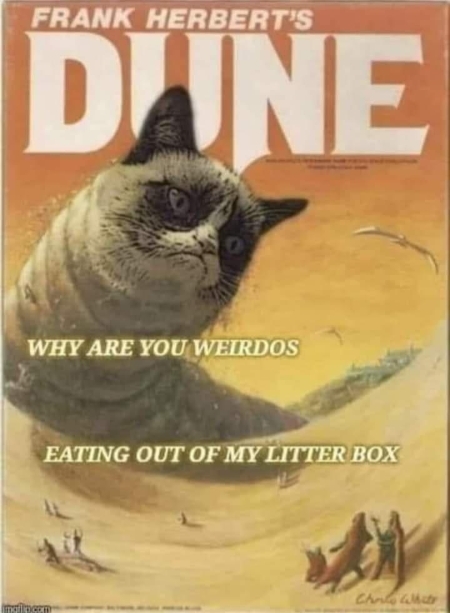
This is an easy one. If the answer is "Yes" then I can put the duplicate copy in the "removal" pile. For example, I had the first four books of The Chronicles of Narnia in a box. Several years ago I bought the omnibus edition, so I no longer needed the individual books. Same thing for the Dune series, as I recently purchased a handsome two-volume omnibus set of Frank Herbert's magnum opus.
If I read the book, did I enjoy it enough to read it again?
This was a bit tougher to answer, but still relatively simple. If the answer is "No" then onto the "removal" pile it goes. I'm sure we all have books that we read once, thought it was "meh" and have no intention of reading it again. Books that are so unremarkable, I can't even think of an example right now.
Did I try to read it one or more times and fail to finish it?
If the answer is "Yes," then it goes on the pile. There were a number of books that I'd tried to read more then once, but simply couldn't get into them for one reason or another. So I put it down and moved on to something more interesting to me at that time.
Has it been on the shelves for multiple decades without me reading it?
I'm sure I'm not alone in saying that there are quite a few books I've purchased over the years that have sat on my shelves for a long, long time without me bothering to read it. Sometimes I have good intentions, but never got around to it. So I decided that I no longer wanted to have them on my shelves. I had a number of Stephen King books, for instance, including his Dark Tower series, which sounded interesting. I tried reading The Dark Tower series, but didn't like the second book, so I never read the rest of them.
All told, I managed to remove 191 books from my home and returned 39 from their place in the garage to place on my shelves. I did have to go to Walmart yesterday and buy a new bookshelf, though. On the plus side, ALL MY BOOKS HAVE A SHELF! They are no longer crammed on top of each other or sitting on top of the bookshelf. Yay!
So, when YOU get rid of books, what's YOUR process?
++++++++++
++++++++++
MORON AUTHOR LOOKING FOR ADVICE
OrangeEnt is mostly done with the manuscript of the book he's been writing (authors are never actually DONE, but at some point you have to decide if you are done enough...)
Now he's looking for feedback on the front and end matter. He especially wants to be sure that he's acknowledged everyone who has assisted him with his writing project. He's also trying to think of how to approach writing the "About the Author" page for a pseudonymous author. Since the author is pseudonymous, why not make him the most interesting man in the world? Who's gonna know?
Here's a link to the draft he sent me: FRONT MATTER
If you have any feedback you'd like to provide or if you want to send a reminder of what you did to assist him, then you can drop him a line at maildrop at proton dot me.
(NOTE: You can also join A Literary Horde group via the email above, which is also posted on the left-hand sidebar of the main page.)
MORON RECOMMENDATIONS
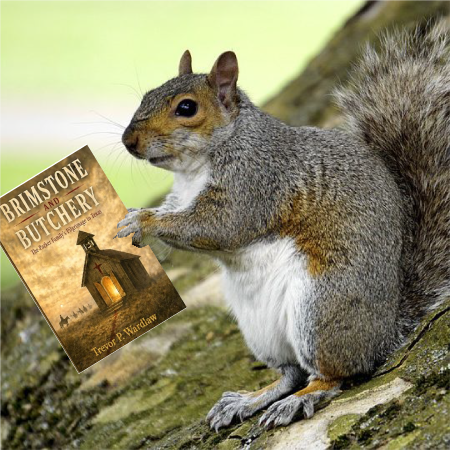
I just read this book because I am a fan of the author, Trevor Wardlaw, who is an excellent historian and storyteller regarding 19th century settlement of the American frontier. In fact, I wrote about the legendary Parker family of Texas a few weeks ago at Ace, and then Mr. Wardlaw and I got in touch shortly thereafter. (He is a descendant of the famous protagonists.) Here is the review I left on Amazon:
"Although I bought this book for some vacation reading about the legendary Parker family of Texas (Quanah, Cynthia Ann, etc), it provided the best exposition I have ever read about the settlement of the American frontier, as the Parker family kept moving west until it bumped into Comancheria. The account of Rachel Parker's capture and subsequent return was riveting. The clash of civilizations along the frontier is recounted without judgment of either side's morality, yet it fully captures the sadness of the violence, as well as the the hardships endured by all parties in that contentious era."
--Buck Throckmorton
Brimstone and Butchery: The Parker Family’s Pilgrimage to Texas
Wardlaw, Trevor P.
Amazon.com: Books
https://amzn.com/dp/B0H6VWNVB9
Comment: As the American empire spread west ("manifest destiny"), it was inevitable that the pioneers and frontiersmen who settled in the West would clash with the native inhabitants. Often bloody encounters. It was not a great time for either side. Eventually America would win out, but we paid for that victory in blood. It is a fascinating time in American history, unique to world history as a whole.
++++++++++
I've been meaning to address the discussion a few weeks ago that concerned Speilburg's movie Disclosure Day and how he incorporated the theme, "Ha Ha, stoopidz X-tianists, ET disproves Jesus Christ!!!"
A book written by Paul Thigpen, Extraterrestial Intelligence and the Catholic Faith makes a survey of various theologians and philosophers examining this issue. Published in 2002 by TAN Books, Thigpen shows that Christians have been thinking about life on other planets for millennia. The general consensus is that God is omnipotent and can create intelligent life on other planets if He so chooses.
This leaves three options for intelligent life on other planets:
- Not Fallen and thus does not need a Redeemer
- Fallen and Un-redeemable
- Fallen, but Redeemable. Since Jesus Christ is the Word Made Flesh, the Word (i.e., 2nd Person of the Triune God) could be incarnate in non-human flesh.
Thigpen also makes a brief examination of UFO phenomena and comes to the conclusion that some could be demonic manifestations.
Interesting book. While it's over 400 pages, it's in Octavo-format with fairly large font: so pretty quick read. Rating = 4.25/5
Posted by: Retired Buckeye Cop is now an engineer at August 09, 2026 09:07 AM (ksbjf)
Comment: The question about the form Christianity might take out there among the stars is one we can only answer if we go out there to find out ourselves, or if a benevolent alien race chooses to make itself known to us.
But as Retired Buckeye Cop points out, that doesn't stop people from speculating about that question in both fiction and nonfiction.
C.S. Lewis' Space Trilogy explores a mixture of the three options. Other planets within our solar system (Mars and Venus) are portrayed as Not Fallen and thus do not require a Redeemer. Earth is uniquely positioned as Fallen but Redeemable.
Dean Koontz's The Taken takes Thigpen's conclusion and runs with it. Alien invaders show up on Earth and begin to xenoform it (the alien version of terraforming), but it turns out that there's a supernatural component to the invasion. Pretty wild story.
MORE MORON RECOMMENDATIONS CAN BE FOUND HERE: AoSHQ - Book Thread Recommendations
+-----+-----+-----+-----+
WHAT I'VE BEEN READING RECENTLY
Mentats of Dune Brian Herbert and Kevin J. Anderson
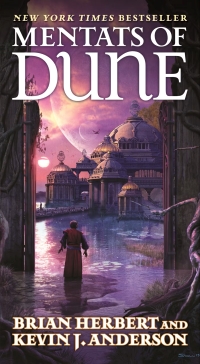
This is the second book in the Great Schools of Dune trilogy, though it's really an extension of Legends of Dune. The Butlerian Jihad under Manford's demented leadership. He's set his sights on the Mentat school, which is led by Gilbertus Albans, the protege of the robot Erasmus. Albans is teaching his students to emulate machine thinking, elevating human computation to its absolute peak.
Meanwhile, Josef Venport, who represents the side of technology in the struggle between his forces and the Butlerian Jihad, is conducting his own war against them, recognizing them as a destabilizing force for the galaxy as a whole. If the Butlerians win, human civilization will enter into a new Dark Age and may never rise again.
Navigators of Dune by Brian Herbert and Kevin J. Anderson
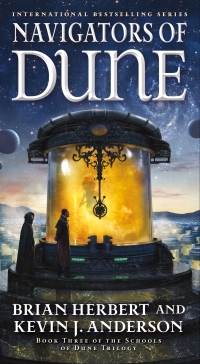
The concluding volume of Great Schools of Dune sets up the Galactic Empire as we know it in the main Dune books written by Frank Herbert. Most of the loose ends are resolved in such a way that the Galactic Empire achieves its monopoly over the Arrakis spice industry and space travel, though the newly formed Spacing Guild is set up as an independent faction within the Empire.
Dune by Frank Herbert
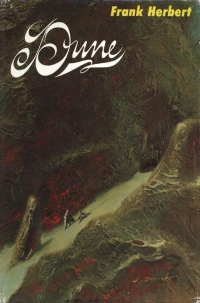
Now we are back to the main storyline established by Frank Herbert. Dune chronicles the journey of Paul "Muad'dib" Atreides from when he arrives on Arrakis as a teenager to when he achieves his godlike prescience as the Kwisatz Haderach and steals the Empire from Padishah Emperor Shaddam IV.
It wasn't quite as good as I remembered it, but it's still entertaining enough to keep me reading it again. It spans about four or five years of Paul's life, though much of that is skipped over once Paul and his mother Jessica join the Fremen. They disappear while Baron Harkonnen schemes to maintain his hold on Arrakis.
The world building in Dune is impressive, but upon closer examination, it doesn't hold up as well as people may think. For one thing, sometime in the distant past Buddhism and Islam merged to become "Buddislam." This makes ZERO SENSE to anyone who knows even a little bit about either religion. They are completely incompatible. There is no way that Islam would ever join itself with another religion since a core tenet of the faith is to dominate everyone everywhere for all time.
The lack of water on Arrakis is also somewhat puzzling when you factor in the technology available in the Dune universe. They clearly have the means for harvesting comets and other water-abundant sources within a solar system, so they could harvest the planetary system's local Kuiper Belt for all the water they ever needed. Water is a very abundant resource in the greater cosmos. Instead, Herbert devised an elaborate ecological system where an alien animal/plant hybrid is introduced on Arrakis that "locks" the water deep underground, when it used to flow freely on the surface.
Dune: Messiah by Frank Herbert
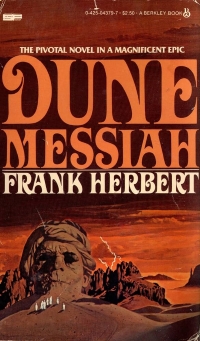
I can summarize this book in one word: BORING.
Paul's Fremen allies, the "Fedaykin," have launched a jihad against the rest of the Galactic Empire. Why? It's never really explained, other than that the Fremen see Paul as their new god and thus want to force the rest of the galaxy to worship Paul Muad'dib.
Much of the book is simply lots and lots of conversations about "prescience" and how knowing the future is not the great gift the people believe it to be. Indeed, Paul's challenge in knowing the future is that is forced to play out the events that lead to the least worst outcome, since all futures for him are horrible.
Star Wars - Darth Bane Trilogy 1 - Path of Destruction by Drew Karpyshyn
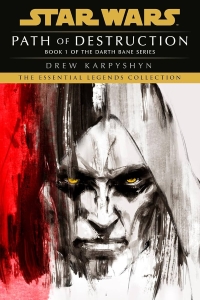
Taking a break from Dune, I decided to read the Darth Bane Trilogy. This documents the rise of the titular villain as he claims the mantle of Lord of the Sith. He methodically destroys the old Sith Order, which was composed of hundreds or thousands of Dark Side Force users and instead establishes the "Rule of Two," where this only a Master and an Apprentice of the Sith. Darth Bane believes that the Dark Side of the Force must be concentrated in as few people as possible in order to cause the greatest destruction.
Children of Dune by Frank Herbert
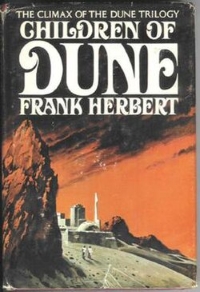
And we're back to Dune. Children of Dune takes place about 9-10 years after Dune: Messiah. Approximately 20 years have passed since Dune. Paul's children are around 10 years old, as they had just been born at the end of the previous book. Like Paul's sister Alia, Leto II and Ghanima are "pre-born," meaning they can access all of the memories of their ancestors going back to ancient Earth. They also have Paul's prescience, so they can see both the past and the future in equal measure.
Leto and Ghanima see a future for humanity without the spice and believe THAT future holds the ultimate key to our destiny, as the spice is actually holding back our development as a civilization. Even though he's physically a young boy, Leto undertakes a desperate journey into the deserts of Arrakis in the hope that he will uncover the lost knowledge he needs to usher in the Golden Path for humanity, in the process losing his own connetion to humanity. It's a sacrifice that he's willing to make.
Tips, suggestions, recommendations, etc., can all be directed to perfessor -dot- squirrel -at- gmail -dot- com.
Disclaimer: Peace is a lie, there is only passion. Through passion, I gain strength. Through strength, I gain power. Through power, I gain victory. Through victory, my chains are broken. The Force Moron Horde shall set me free.

posted by Open Blogger at
09:00 AM
|
Access Comments